Home › The Japanese Dragon › The Japanese Dragon
The Japanese Dragon
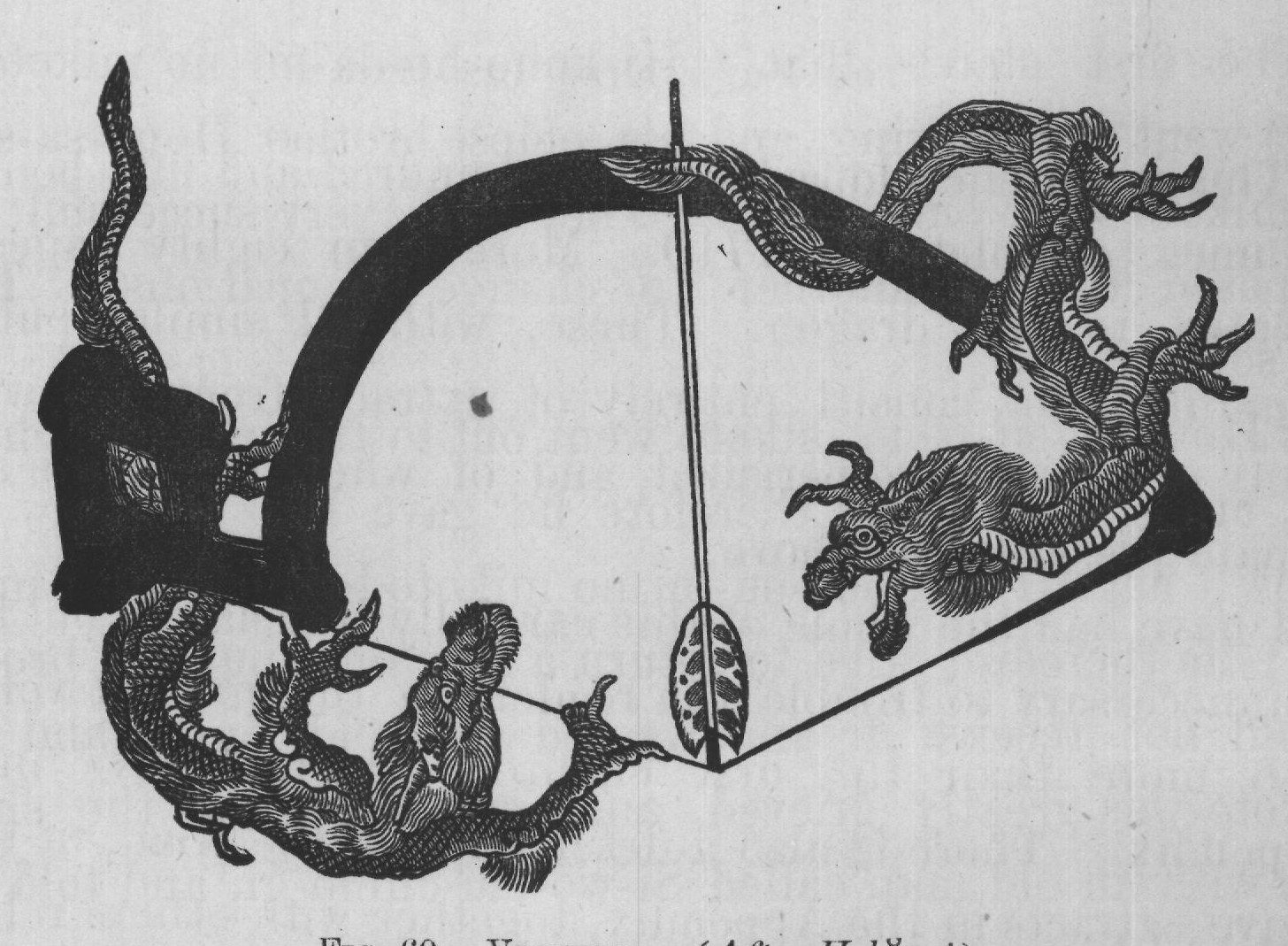
THERE is but little additional information as to the dragon to be gained from Japan, the traditions relating to it in that country having been obviously derived from China. In functions and qualities it is always represented as identical with the Chinese dragon. In Japan, however, it is invariably figured as possessing three claws, whereas in China it has four or five, according as it is an ordinary or an imperial emblem. The peasantry are still influenced by a belief in its supernatural powers, or in those of some large or multipleheaded snake, supposed to be a transformation of it, and to be the tenant of deep lakes or of springs issuing from mountains.
I give, as examples of dragon stories, two selected from the narratives of mythical history,* and one extracted from a native journal of the day. * The first two stories are from the Ko Ku Shi Riyah, a recent history of Japan, from the earliest periods down to the present time, by Matsunai, with a continuation by a later author. They are contained in The first states that "Hi-koho-ho-da-mi no mikoto (a god) went out hunting, and his eldest brother Hono-sa-su-ri no mikoto went out fishing. They were very successful, and proposed to one another to change occupations. did so.
They "Hono-sa-su-ri no mikoto went out to the mountain hunting, but got nothing, therefore he gave back his bow and arrow; but Hi-ko-hoho-da-mi no mikoto lost his hook in the sea; he therefore tried to return a new one, but his brother would not receive it, and wanted the old one; and the mikoto was greatly grieved, and, wandering on the shore, met with an old man called Si-wo-tsu-chino-gi, and told him what had happened. "The latter made a cage called mé-na-shi.kogo, enclosed him in it, and sank it to the bottom of the sea. The mikoto proceeded to the temple of the sea-god, who gave him a girl, Toyotama, in marriage. He remained there three years, and recovered the hook which he had lost, as well as receiving two pieces of precious jade called 'ebb' and 'flood.' He then returned. After some years he died. His son, Hiko-na-gi-sa-ta-k'e-ouga-ya-fu-ki-ayā-dzu no mikoto, succeeded to the crown. "When his father first proposed to return, his wife told him that she was enciente, and that she would come out to the shore during the rough weather and heavy sea, saying, 'I hope you will wait until you have completed a house for my confinement.' After some time Toyotama came there and begged him never to come to her bed when she was sleeping. He, however, crept up and peeped at her. He saw a dragon holding a child in the midst of its coils. It suddenly jumped up and darted into the sea." the first chapter of the first volume. The third is given as an ordinary item of news in the journal called the Chin-jei-Nippo, April 30th, MYTHICAL MONSTERS.