Home › Introduction › Introduction: Bird
Introduction: Bird
The lilliputian forests from which the royal navy was constructed contained even large trees in comparison with the dwarf oaks of Mexico, or with the allied, even smaller * The Bower Bird, Ptilonorhyncus holosericeus, and the Gardenbuilding Bird of New Guinea, Amblyornis inornara. † Recherches, &c. des Mammiferes, plate 1. Paris, 1868 to 1874. † "This obstacle was a forest of oaks, not giant oaks, but the very reverse, a forest of dwarf oaks (Quercus nana). Far as the eye could reach extended the singular wood, in which no tree rose above thirty species, which crawls like heather about the hill-slopes of China and Japan, and still more so in comparison with that singular pine, the most diminutive known (Dacrydium taxifolium), fruiting specimens of which, according to Kirk, are sometimes only two inches high, while the average height is only six to ten inches; while even among the forests of Brobdignag, a very respectable position could be held by the mammoth trees of California (Sequoia gigantea), or by the loftier white gums of Australia (Eucalyptus amygdalina), which occasionally reach, according to Von Mueller, * the enormous height of 480 feet. Nor could more adequate tenants (in point of size) be found to occupy them than the gigantic reptilian forms lately discovered by Marsh among the deposits of Colorado and Texas.
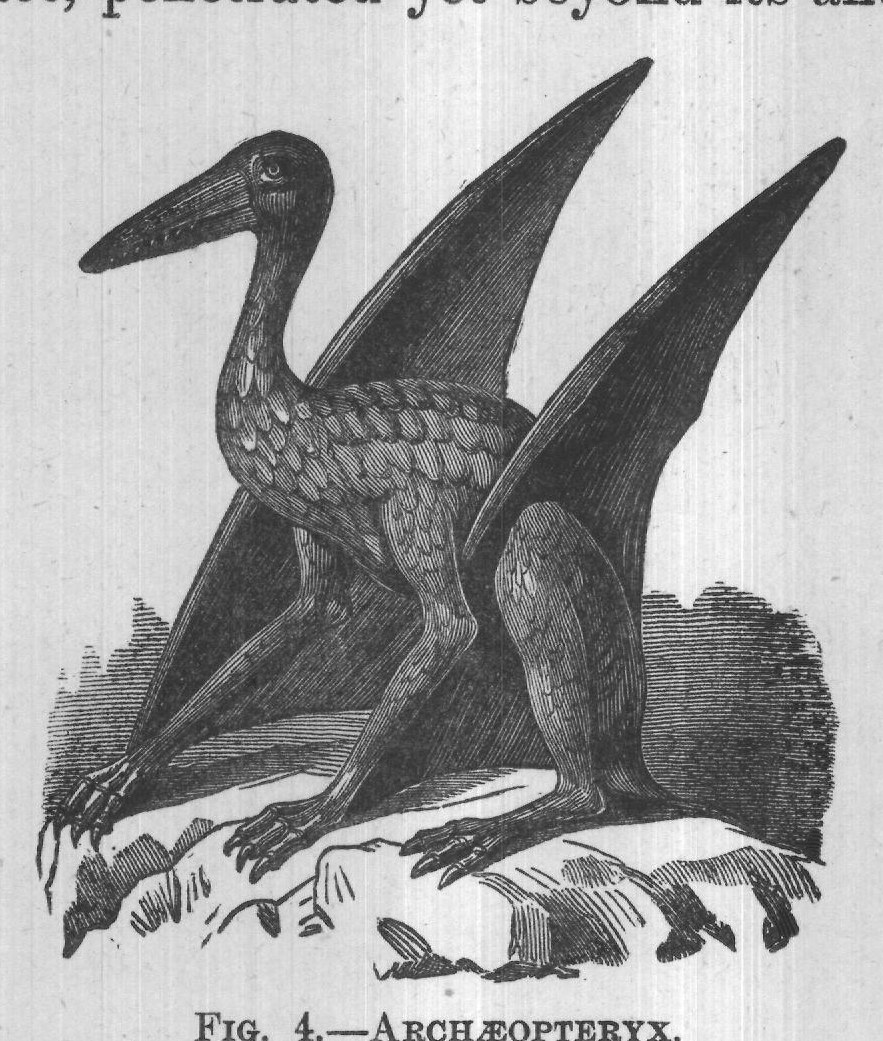
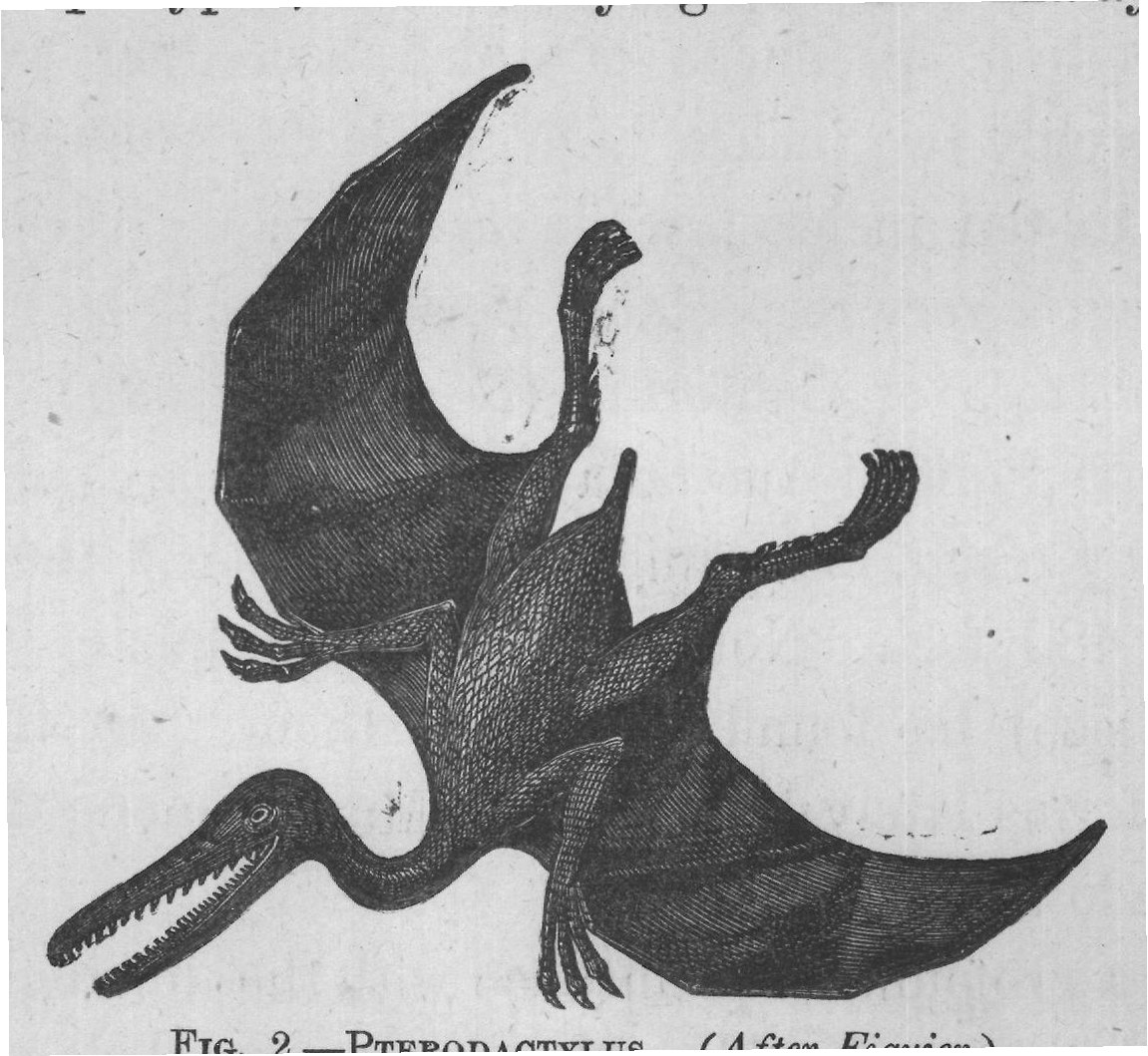
Surely a profound acquaintance with the different branches of natural history should render a man credulous rather than incredulous, for there is hardly conceivable a creature so monstrous that it may not be paralleled by existing ones in every-day life.† inches in height. Yet was it no thicket, no undergrowth of shrubs, but a true forest of oaks, each tree having its separate stem, its boughs, its lobed leaves, and its bunches of brown acorns." - Capt. Mayne Reid, The War Trail, chap. lxiv. * Respecting the timber trees of this tract, Dr. Ferdinand von Mueller, the Government botanist, thus writes:--" At the desire of the writer of these pages, Mr. D. Bogle measured a fallen tree of Eucalyptus amygdalina, in the deep recesses of Dandenong, and obtained for it a length of 420 feet, with proportions of width, indicated in a design of a monumental structure placed in the exhibition; while Mr. G. Klein took the measurement of a Eucalyptus on the Black Spur, ten miles distant from Healesville, 480 feet high! In the State forest of Dandenong, it was found by actual measurement that an acre of ground contained twenty large trees of an apparent average height of about 350 feet." R. Brough Smyth, The Gold Fields of Victoria. Melbourne, † "In the next place, we must remember how impossible it is for the mind to invent an entirely new fact. There is nothing in the mind of Are the composite creatures of Chaldæan mythology so very much more wonderful than the marsupial kangaroo, the duck-billed platypus, and the flying lizard of Malaysia which FIG. 2.-PTERODACTYLUS. (After Figuier.) are, or the pterodactylus, rhamphorynchus, and archæopteryx which have been? Does not geological science, day by day, trace one formation by easy gradation to another, bridge over FIG. 3.-RHAMPHORYNCHUS. (From "Nature.") the gaps which formerly separated them, carry the proofs of the existence of man constantly further and further back into remote time, and disclose the previous existence of interman that has not pre-existed in nature. Can we imagine a person, who never saw or heard of an elephant, drawing a picture of such a twotailed creature?" -J. Donelly, Rangarok, p. 119. New York, 1883, mediate types (satisfying the requirements of the Darwinian theory) connecting the great divisions of the animal kingdom, of reptile-like birds and bird-like reptiles? Can we suppose that we have at all exhausted the great museum of nature? Have we, in fact, penetrated yet beyond its ante-chambers? FIG. 4.-ARCHÆOPTERYX.
Does the written history of man, comprising a few thousand years, embrace the whole course of his intelligent existence? or have we in the long mythical eras, extending over hundreds of thousands of years and recorded in the chronologies of Chaldæa and of China, shadowy mementoes of pre-historic man, handed down by tradition, and perhaps transported by a few survivors to existing lands from others which, like the fabled (?) Atlantis of Plato, may have been submerged, or the scene of some great catastrophe which destroyed them with all their civilization.
The six or eight thousand years which the various interpreters of the Biblical record assign for the creation of the world and the duration of man upon the earth, allow little enough space for the development of his civilization-a civilization which documental evidence carries almost to the verge of the limit for the expansion and divergence of stocks, or the obliteration of the branches connecting them. But, fortunately, we are no more compelled to fetter our belief within such limits as regards man than to suppose that his appearance on the globe was coeval with or immediately successive to its own creation at that late date. For while geological science, on the one hand, carries back the creation of the world and the appearance of life upon its surface to a period so remote that it is impossible to estimate it, and difficult even to faintly approximate to it, so, upon the other, the researches of palæontologists have successively traced back the existence of man to periods variously estimated at from thirty thousand to one million years-to periods when he co-existed with animals which have long since become extinct, and which even excelled in magnitude and ferocity most of those which in savage countries dispute his empire at the present day. Is it not reasonable to suppose that his combats with these would form the most important topic of conversation, of tradition, and of primitive song, and that graphic accounts of such struggles, and of the terrible nature of the foes encountered, would be handed down from father to son, with a fidelity of description and an accuracy of memory unsuspected by us, who, being acquainted with reading and writing, are led to depend upon their artificial assistance, and thus in a measure fail to cultivate a faculty which, in common with those of keenness of vision and hearing, are essential to the existence of man in a savage or semi-savage condition ?* The illiterate backwoodsman or trapper (and hence by inference the savage or semi-civilized man), whose mind is * "I conceive that quite a large proportion of the most profound thinkers are satisfied to exert their memory very moderately. It is, in fact, a distraction from close thought to exert the memory overmuch, and a man engaged in the study of an abstruse subject will commonly rather turn to his book-shelves for the information he requires than tax his memory to supply it." - R. A. Proctor, Pop. Sci. Monthly, Jan, occupied merely by his surroundings, and whose range of thought, in place of being diffused over an illimitable horizon, is confined within very moderate limits, develops remarkable powers of observation and an accuracy of memory in regard to localities, and the details of his daily life, surprising to the scholar who has mentally to travel over so much more ground, and, receiving daily so many and so far more complex ideas, can naturally grasp each less firmly, and is apt to lose them entirely in the haze of a period of time which would still leave those of the uneducated man distinguishable or even prominent landmarks.* Variations in traditions must, of course, occur in time, and the same histories, radiating in all directions from centres, vary from the original ones by increments dependent on proportionately altered phases of temperament and character, induced by change of climate, associations and conditions of life; so that the early written history of every country reproduces under its own garb, and with a claim to originality, attenuated, enriched, or deformed versions of traditions common in their origin to many or all.t * “It was through one of these happy chances (so the Brothers Grimm wrote in 1819) that we came to make the acquaintance of a peasant woman of the village of Nieder-Zwehrn, near Cassel, who told us the greater part of the Märchen of the second volume, and the most beautiful of it too. She held the old tales firmly in her memory, and would sometimes say that this gift was not granted to everyone, and that many a one could not keep anything in its proper connection. Anyone inclined to believe that tradition is easily corrupted or carelessly kept, and that therefore it could not possibly last long, should have heard how steadily she always abided by her record, and how she stuck to its accuracy. She never altered anything in repeating it, and if she made a slip, at once righted herself as soon as she became aware of it, in the very midst of her tale. The attachment to tradition among people living on in the same kind of life with unbroken regularity, is stronger than we, who are fond of change, can understand." Odinic Songs in Shetland. Karl Blind, Nineteenth Century, June 1879. † See quotation from Gladstone, Nineteenth Century, Oct. 1879. Stories of divine progenitors, demigods, heroes, mighty hunters, slayers of monsters, giants, dwarfs, gigantic serpents, dragons, frightful beasts of prey, supernatural beings, and myths of all kinds, appear to have been carried into all corners of the world with as much fidelity as the sacred Ark of the Israelites, acquiring a moulding-graceful, weird or uncouth-according to the genius of the people or their capacity for superstitious belief; and these would appear to have been materially affected by the varied nature of their respective countries. For example, the long-continuing dwellers in the open plains of a semi-tropical region, relieved to a great extent from the cares of watchfulness, and nurtured in the grateful rays of a genial but not oppressive sun, must have a more buoyant disposition and more open temperament than those inhabiting vast forests, the matted overgrowth of which rarely allows the passage of a single ray, bathes all in gloom, and leaves on every side undiscovered depths, filled with shapeless shadows, objects of vigilant dread, from which some ferocious monster may emerge at any moment. Again, on the one hand, the nomad roaming in isolation over vast solitudes, having much leisure for contemplative reflection, and on the other, the hardy dwellers on storm-beaten coasts, by turns fishermen, mariners, and pirates, must equally develop traits which affect their religion, polity, and customs, and stamp their influences on mythology and tradition.