Home › The Chinese Dragon › The Chinese Dragon: Shan
The Chinese Dragon: Shan
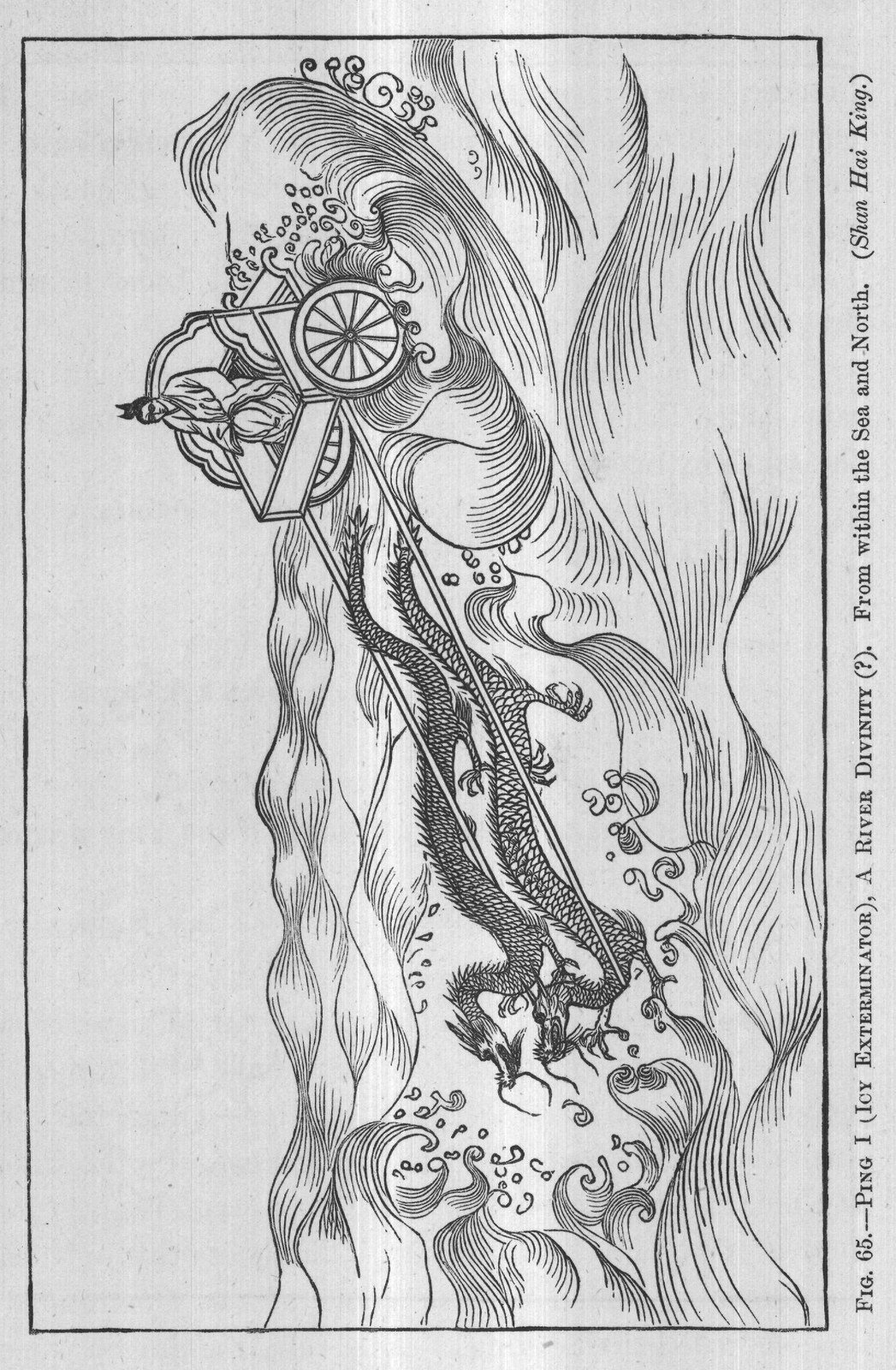
G FIG. 65.--PING I (ICY EXTERMINATOR), A RIVER DIVINITY (?). From within the Sea and North. (Shan Hai King.) ७ MYTHICAL MONSTERS.
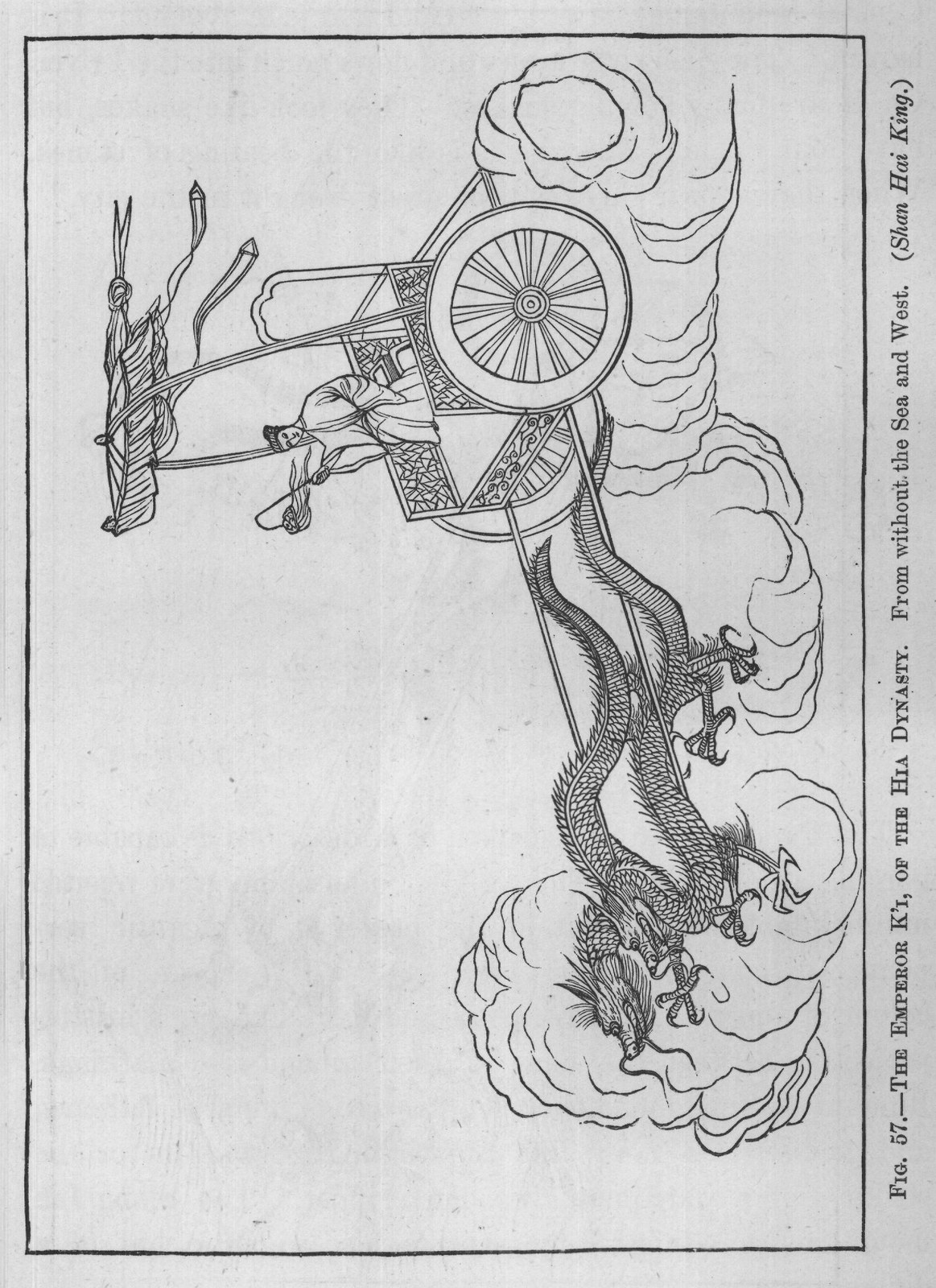
FIG. 57. THE EMPEROR K'I, OF THE HIA DYNASTY. From without the Sea and West. (Shan Hai King.) The Shan Hai King contains valuable notices of winged snakes and gigantic serpents, as, for example, the so-called singing snakes. Speaking of the Sien mountain (one of the Central Mountains), it says: "Gold and jade abound. It is barren.
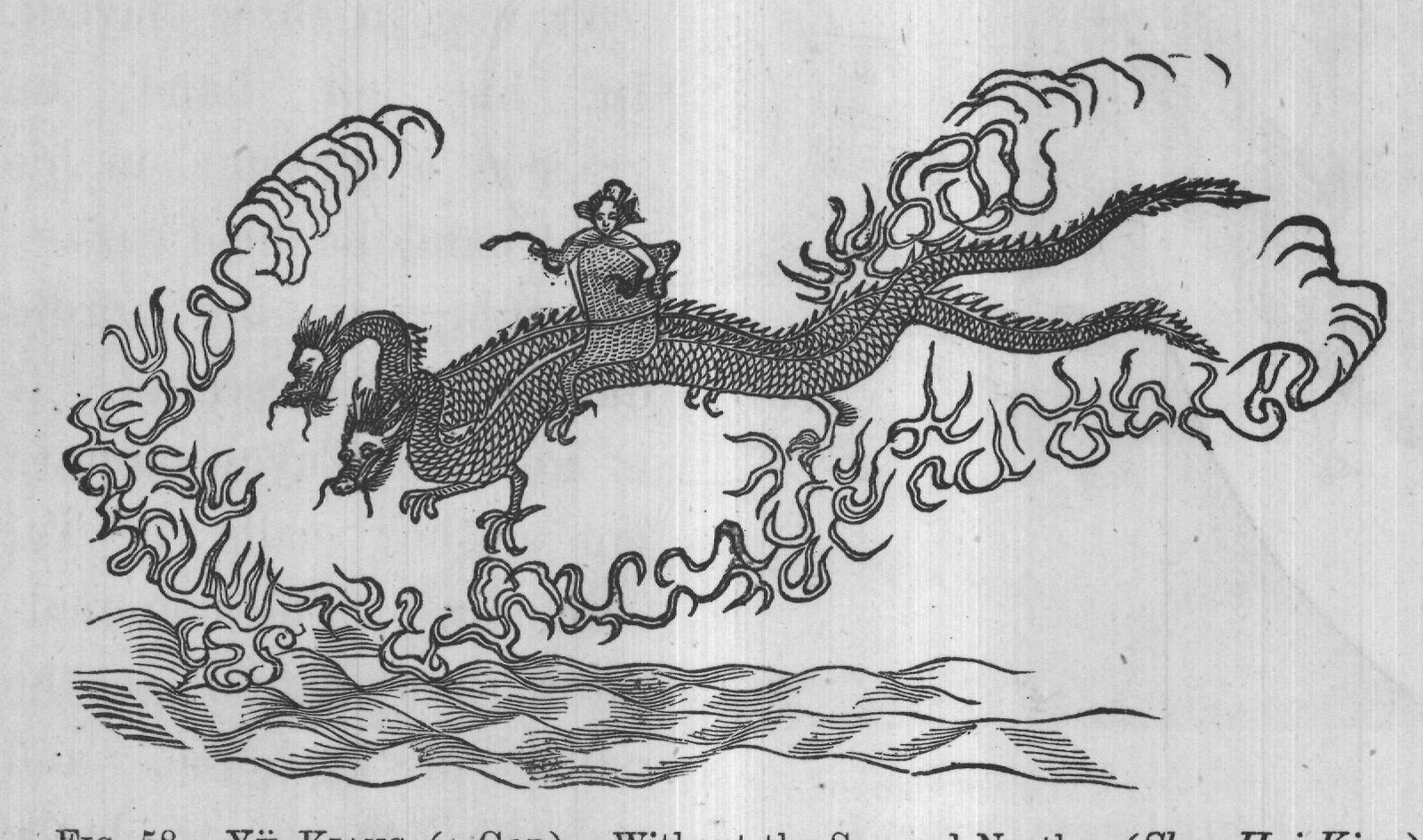
The Sien river issues and flows north into the I river. On it are many singing snakes. They look like snakes, but have four wings. Their voice is like the beating of stones. When they appear there will be great drought in the city." FIG. 58. YÜ KIANG (A GOD). Without the Sea and North. (Shan Hai King.) The Pa snake, already spoken of, is described as capable of gorging an elephant. The Ta Hien mountains were reputed uninhabitable on account of the presence of gigantic serpents (pythons?), which were said to have been of the colour of mugwort, to have possessed hairs like pig's bristles projecting between the lines of their riband-like markings. Rumour had magnified their length to one hundred fathoms, and they made a noise like the beating of a drum or the striking of a watchman's wooden clapper. The Siong Jan mountains were infested by serpents, also gigantic, but of a different species.