Home › The Chinese Dragon › The Chinese Dragon: Ping
The Chinese Dragon: Ping
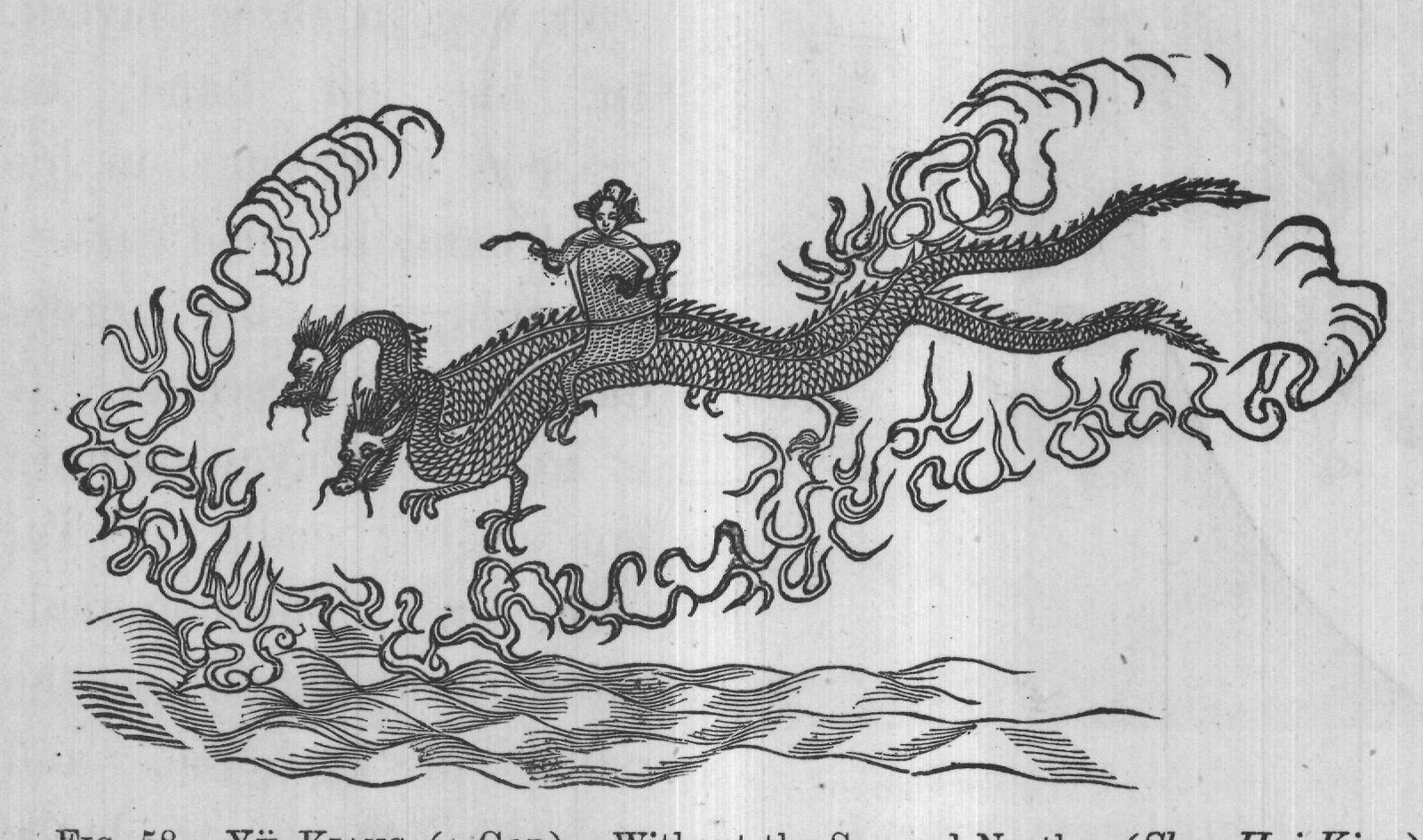
The annexed wood-cuts (Figs. 56, 57) of Ping I (Icy exterminator), and the Emperor K'i (в.c. 2197), each in cars, driving two dragons, are interesting in connection with the later fable of Medea and Triptolemus. The two stories were probably derived from a common source; the Chinese version, however, being much the older of the two. The text as to K'i is :- "K'i of the Hia dynasty danced with Kiutai at the Tayoh common. He drove two dragons. The clouds overhung in three layers.
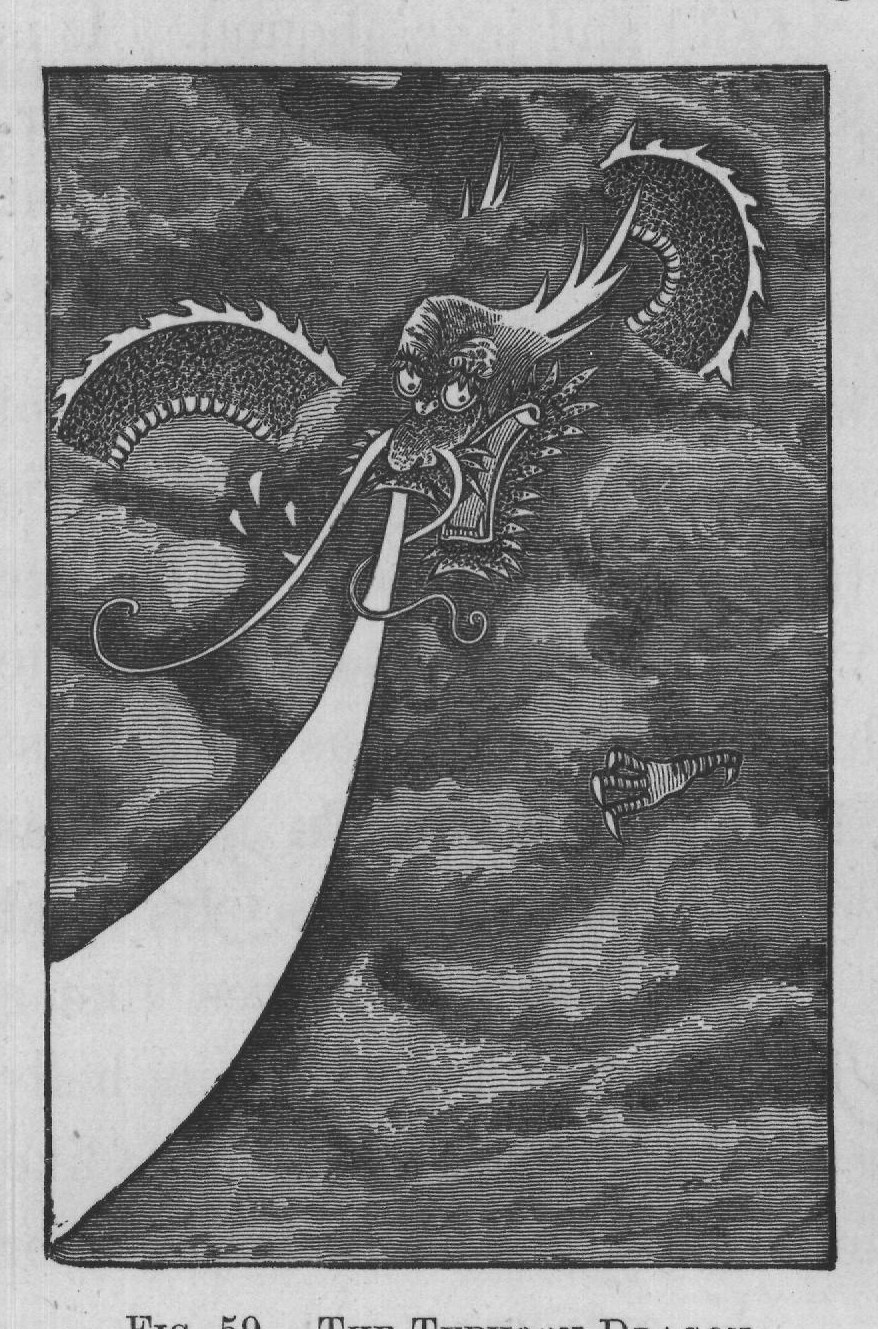
In his left hand he grasped a screen; in his right hand he held ear ornaments; at his girdle dangled jade crescents. It is north of Tayun mount; one author calls it Tai common." The commentator says Kiutai is the name of a horse, and "dance" means to dance FIG. 59. THE TYPHOON DRAGON. (From a Chinese Painting.) in a circle. [Probably this is the earliest reference extant to a circus performance.] Ping I is supposed to dwell in Tsung Ki pool near the fairy region of Kwa-Sun, to have a human face, and to drive two dragons.
Cursorily examined, the Shan Hai King is a farrago of falsehood; read with intelligence, it is a mine of historical wealth. THE PAN TSAO KANG Μυ.* Descending to late times, we have the great Chinese Materia Medica, in fifty-two volumes, entitled Păn Tsao Kang * The reader is referred, for a careful précis of the contents of this valuable work, to an exhaustive paper entitled "Botanicon Sinicum," in the Journal of North China Branch Royal Asiatic Society, 1881, by E. Bretschneider, M.D.