Home › The Dragon › The Dragon (FIG Draco OR FLYING LIZARD)
The Dragon (FIG Draco OR FLYING LIZARD)
FIG. 33. Draco, OR FLYING LIZARD FROM SINGAPORE. (After N. B. Dennys.) THE dragon is defined in the Encyclopædia Britannica for 1877 as "the name given by the ancients to a huge winged lizard or serpent (fabulous)."
The text also goes on to state that "they (the ancients) regarded it as the enemy of mankind, and its overthrow is made to figure among the greatest exploits of the gods and heroes of heathen mythology. A dragon watched the gardens of the Hesperides, and its destruction formed one of the seven labours of Hercules.
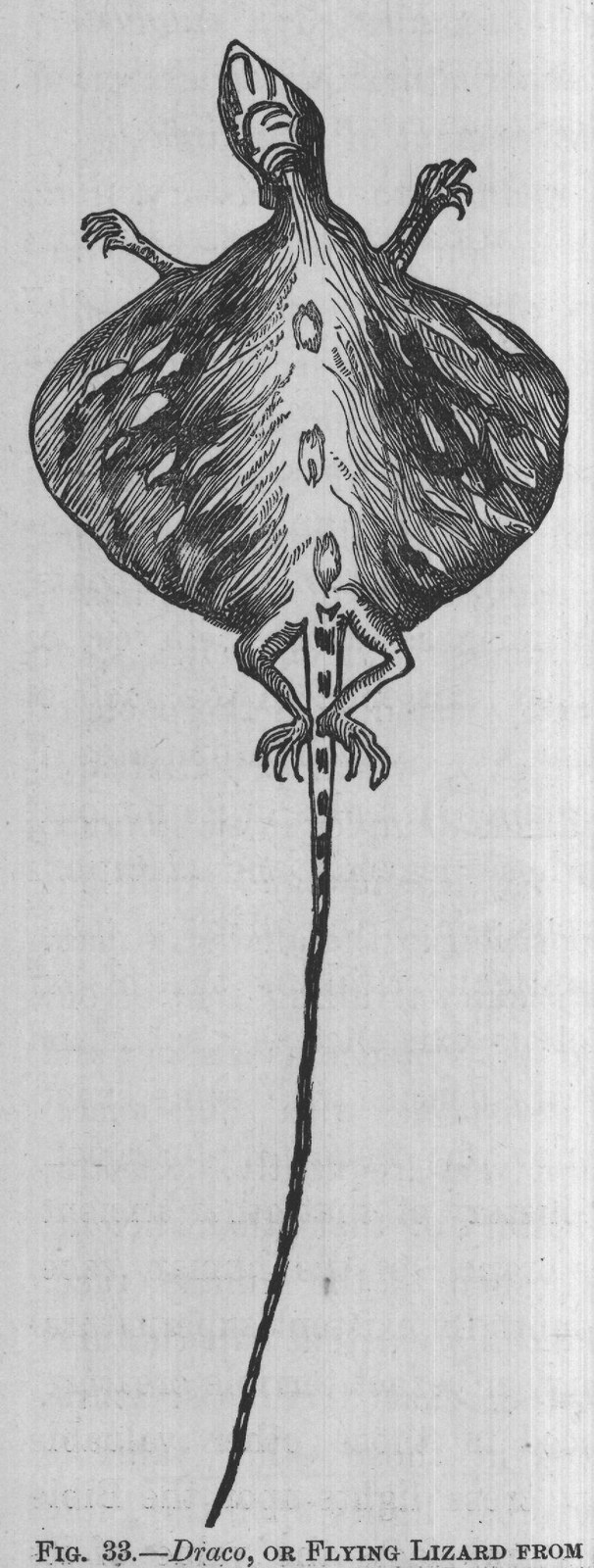
Its existence does not seem to have been called in question by the older naturalists; figures of the dragon appearing in the works of Gesner and Aldrovandus, and even specimens of the monster, evidently formed artificially of portions of different animals, have been exhibited." A reference is also made to the genus Draco, comprising eighteen specimens of winged lizards, all small, and peculiar to India and the islands of the Malay archipelago.
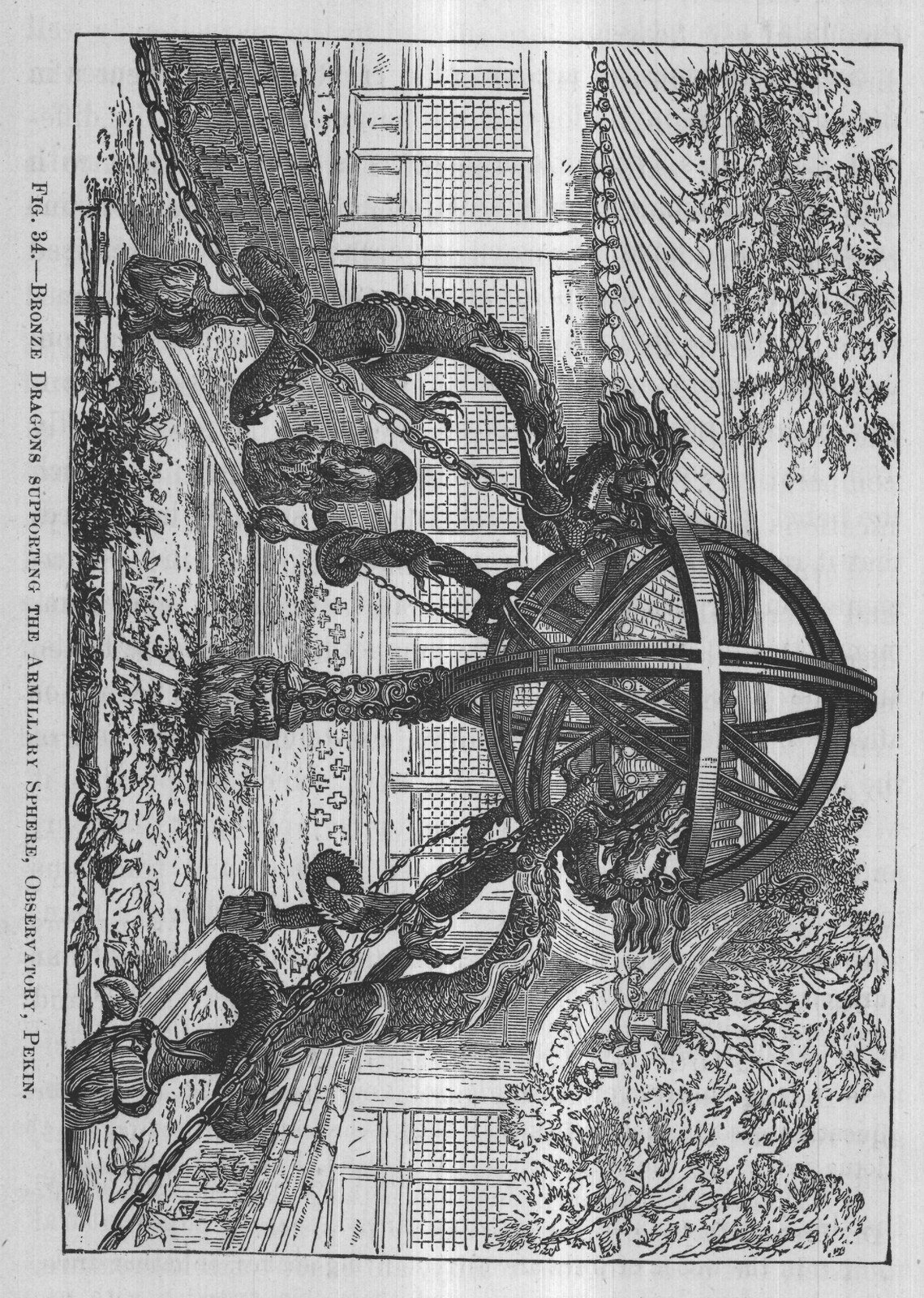
Such is the meagre account of a creature which figures in the history and mythology of all nations, which in its different forms has been worshipped as a god, endowed with beneficent and malevolent attributes, combatted as a monster, or supposed to have possessed supernatural power, exercised alternately for the benefit or chastisement of mankind. Its existence is inseparably wedded to the history, from the most remote antiquity, of a nation which possesses connected and authentic memoirs stretching uninterruptedly from the present day far into the remote past; on which the belief in its existence has been so strongly impressed, that it retains its emblem in its insignia of office, in its ornamentation of furniture, utensils, and dwellings, and commemorates it annually in the competition of dragon boats, and the processions of dragon images; which believes, or affects to believe, in its continued existence in the pools of the deep, and the clouds of the sky; which propitiates it with sacrifices and ceremonies, builds temples in its honour, and cultivates its worship; whose legends and traditions teem with anecdotes of its interposition in the affairs of man, and whose scientific works, of antiquity rivalling that of our oldest Western Classics, treat of its existence as a sober and accepted fact, and differentiate its species with some exactness. It is, moreover, though not very frequently, occasionally referred to in the Biblical history of that other ancient, and almost equally conservative branch of the human race, the Jews, not as a myth, or doubtfully existent supernatural monster, but as a tangible reality, an exact terrible creature. Equally do we find it noticed in those other valuable records of the past which throw cross lights upon the Bible narrative, and confirm by collateral facts the value of its + FIG. 34. BRONZE DRAGONS SUPPORTING THE ARMILLARY SPHERE, OBSERVATORY, PEKIN. 11 historic truth; such as the fragments of Chaldæan history handed down by the reverent care of later historians, the careful narrative of Josephus, and the grand resurrection of Chaldæan and Assyrian lore effected by the marvellously well directed and fortunate labour of G. H. Smith and those who follow in his train.