Home › Extinction of Species › Extinction of Species: Mastodon
Extinction of Species: Mastodon
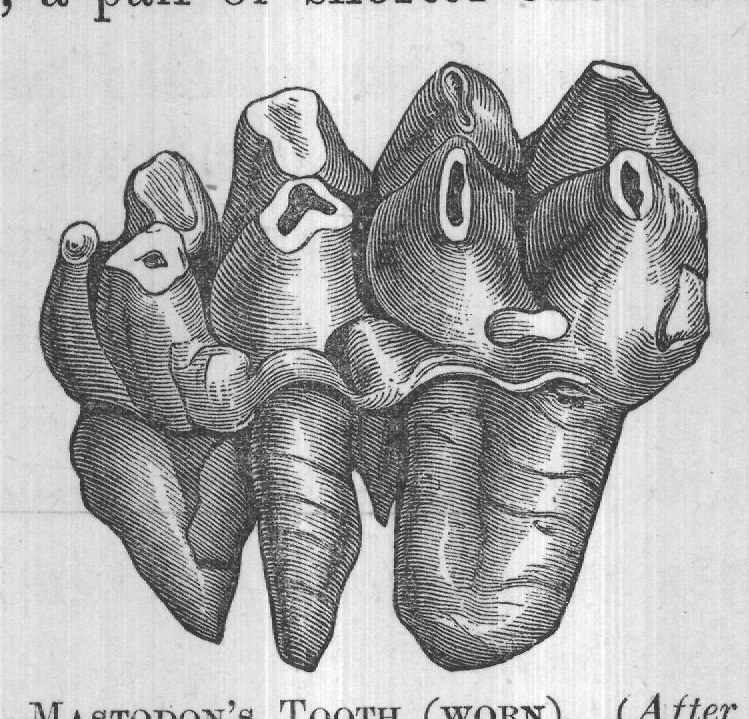
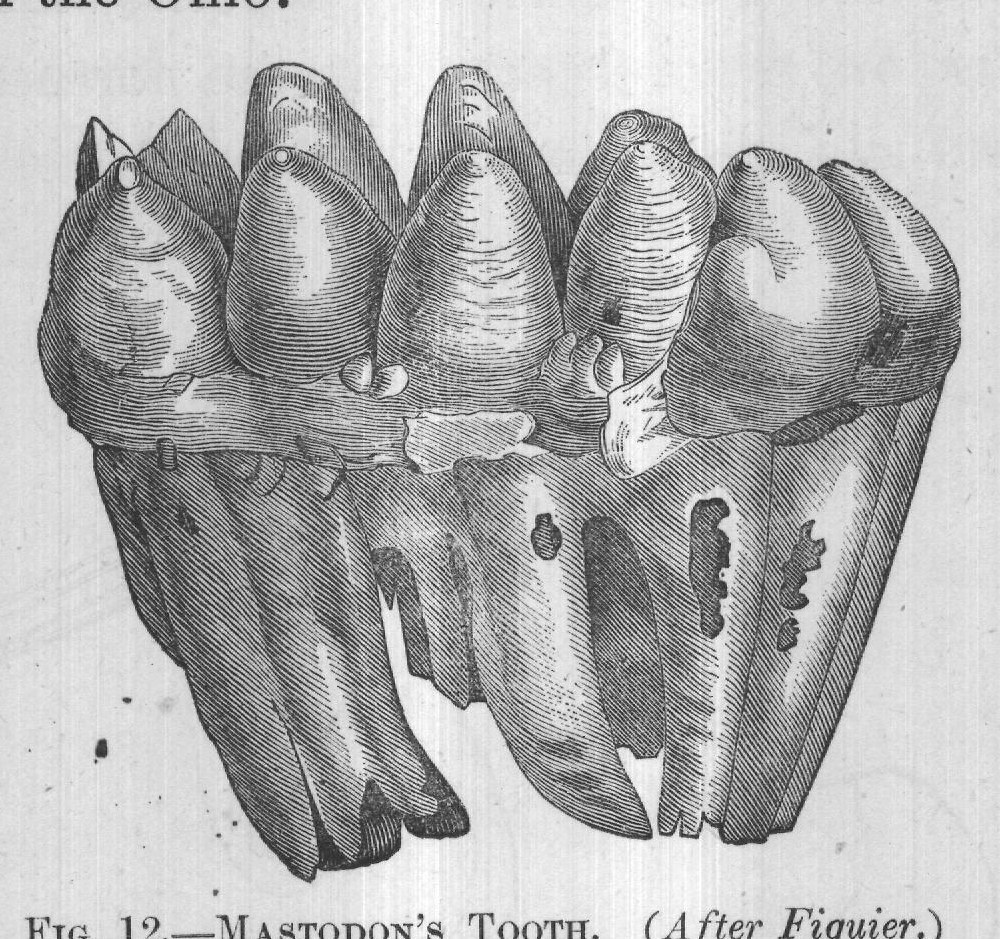
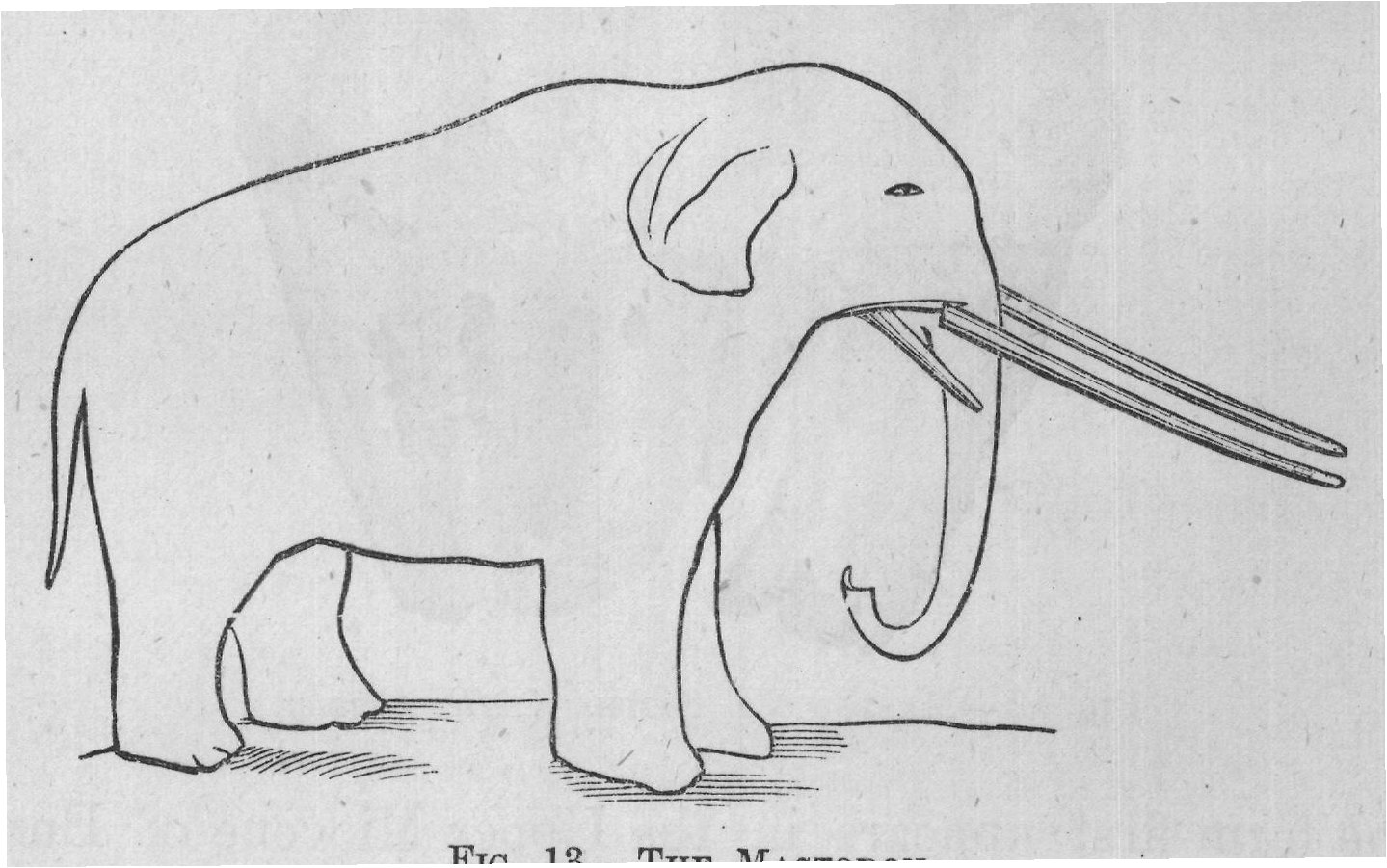
THE MASTODON. - The generic title Mastodon has been applied to a number of species allied to the elephants, but distinguished from them by a peculiar structure of the molar teeth; these are rectangular, and in their upper surfaces exhibit a number of great conical tuberosities with rounded points disposed in pairs, to the number of four or five, according to the species; whereas in the elephants they are broad and uniform, and regularly marked with furrows of large curvature. The mastodons, in addition to large tusks in the premaxillæ, like those of the elephant, had also in most instances, a pair of shorter ones in the mandible. FIG. 11. MASTODON'S TOOTH (WORN). (After Figuier.) Cuvier established the name Mastodon, * or teat-like toothed animals, for the gigantic species from America which Buffon had already described under the name of the animal or elephant of the Ohio.
FIG. 12. MASTODON'S TOOTH. (After Figuier.) The form first appears in the Upper Miocene of Europe, five species being known, two of them from Pikermi, near Athens, and one, M. angustidens, from the Miocene beds of * From μαστός "a teat," and ὀδούς “ a tooth.” Malta. Mastodon remains have also been found in the beds of the Sivalik hills, and four species of mastodon in all are known to have ranged over India during those periods. In Pliocene deposits we have abundant remains of M. arvernensis, and M. longirostris from the Val d'Arno in Italy, and the M. Borsoni from central France.