Home › Extinction of Species › Extinction of Species: Pliocene
Extinction of Species: Pliocene
The M. arvernensis may be considered as a characteristic Pliocene species in Italy, France, and Europe generally. In Britain it occurs in the Norwich Crag and the Red Crag of Suffolk.
Species of mastodon occur in the Pliocene of La Plata, and of the temperate regions of South America; on the Pampas, and in the Andes of Chili.
The Mastodon mirificus of Leidy is the earliest known species in America; this occurs in Pliocene deposits on the Niobrara and the Loup fork, west of the Mississippi.
The remains of the Mastodon americanus of Cuvier occur abundantly in the Post Pliocene deposits throughout the United States, but more especially in the northern half; they are also found in Canada and Nova Scotia.
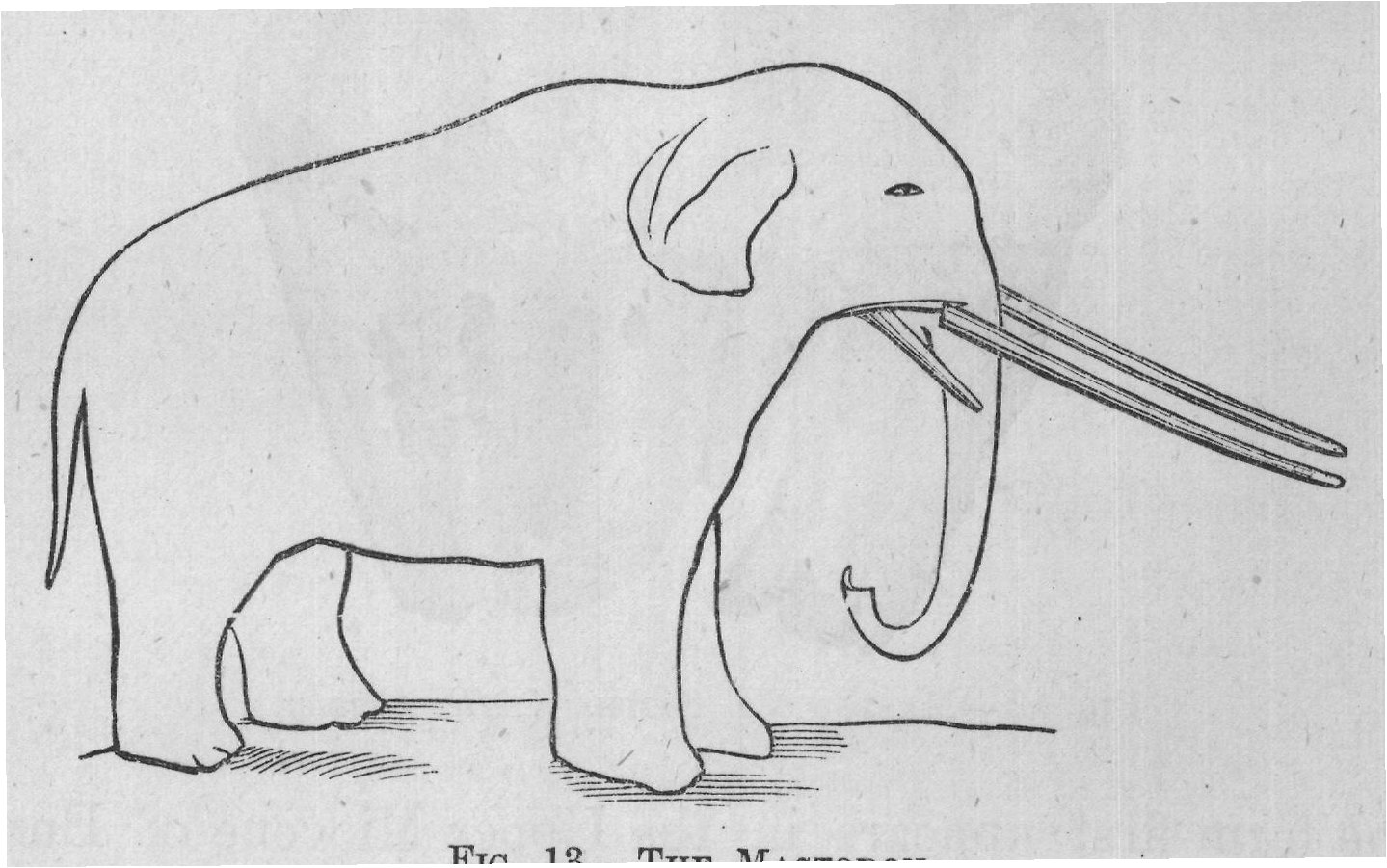
FIG. 13. THE MASTODON.
Perfect skeletons are occasionally procured from marshes, where the animals had become mired. In life this species appears to have measured from twelve to thirteen feet in height and twenty-four to twenty-five feet in length, including seven feet for the tusks. Undigested food found with its remains show that it lived partly on spruce and fir-trees. A distinct species characterised the Quaternary deposits of South America.