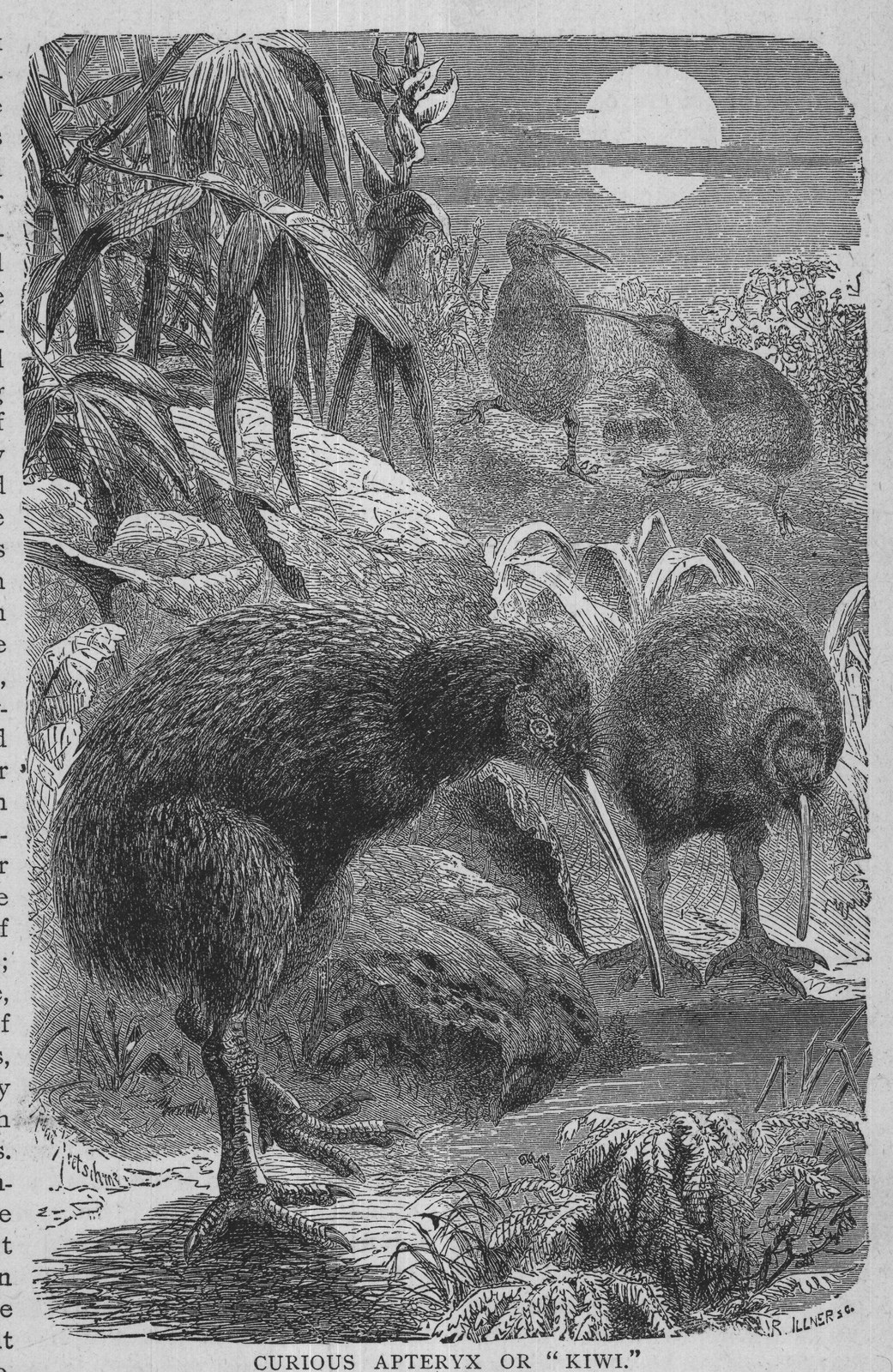
R Illner Sc
fore they make any effective attempts to fly.
Fish is the principal food of the Great The tail has not the dazzling splendor Heron, and for this purpose, like an expe- of the peacock, but it surpasses it in rienced angler, he often waits for that beauty of shape. There are, as you see, condition of the tide, which best suits his two large curved feathers, of black and experience and instinct. At such times, brown striped, that curve into the form he is seen slowly sailing out from his of a lyre, and between them are a number inland breeding haunts, during the most of finer and gauze-like feathers that fill silent and cool period of the summer's up the space and give them a most ele. day, selecting usually such shallow inlets gant appearance. Nothing so striking or as the ebbing tide leaves bare, or access- graceful had been ever imagined, and yet ible, to his watchful and patient mode of it had been hidden in the wild bushes of prowling; here, wading to the knees, he Australia from time immemorial. stands motionless amidst the timorous Of all the birds the Lyre-bird is the fry, till some victim coming within his most difficult to catch sight of, much less wily range, is as instantly seized by the to procure. Its large strong feet are powerful bill of the Heron, as if it were made for running, and it is constantly the balanced poniard of the assassin, or going up and down among the brushthe unerring pounce of the osprey. If wood, from the top of the mountains to large, the fish is beaten to death, and the steep and stony gullies below. It commonly swallowed with the head carries its tail erect, so that it can come descending as if to avoid any obstacle to no danger. It has a loud cry, which may arising from the reversion of the fins. be heard a long way off, and another note, which may be called a song, but which The Lyre-bird.
Another remarkable specimen of the cannot be heard unless you are close by. feathered tribe is the Lyre-bird.
The naturalist goes through unheard- In the beginning of the present century of toils to catch a sight of the birds. He a party of rather turbulent Irishmen were lies hidden among the brushwood, and sent on a voyage of discovery to New hears their loud shrill notes, for days to- South Wales. The governor hardly knew gether, without being able to obtain a what to do with them, and he thought the glimpse of them. Quite determined to hardships of travelling in an unknown do so, he does not give up his point, but country would cure their restlessness. climbs along the gullies and ravines, When they returned, they brought with where he has to cling to trees and creeping plants to keep himself from falling. These are the spots where the birds often resort; but if so much as a branch cracks, or a stone rolls over, they take the them a bird which they called a pheasant.
Its size was that of a common hen, of a reddish black color, and with strong black legs. It had a crest on its head, but its tail was the most extraordinary part of it. alarm and are gone. Even when the It spread out in the shape of a lyre, and hunter has come up with one of them, he was composed of several feathers of a has to crawl among the branches of the light brown color, inclining to orange, trees and remain perfectly motionless. If and shading into silver. The end of each the bird is not singing, or engaged in feather was black. The feathers were of scratching for food, it is almost sure to a different texture, alternately thin and perceive him if he stirs either hand or thick. foot, and it vanishes as if by magic.