Home › The Dinornis-A Bird Without Wings › The Dinornis-A Bird Without Wings: Heron
The Dinornis-A Bird Without Wings: Heron
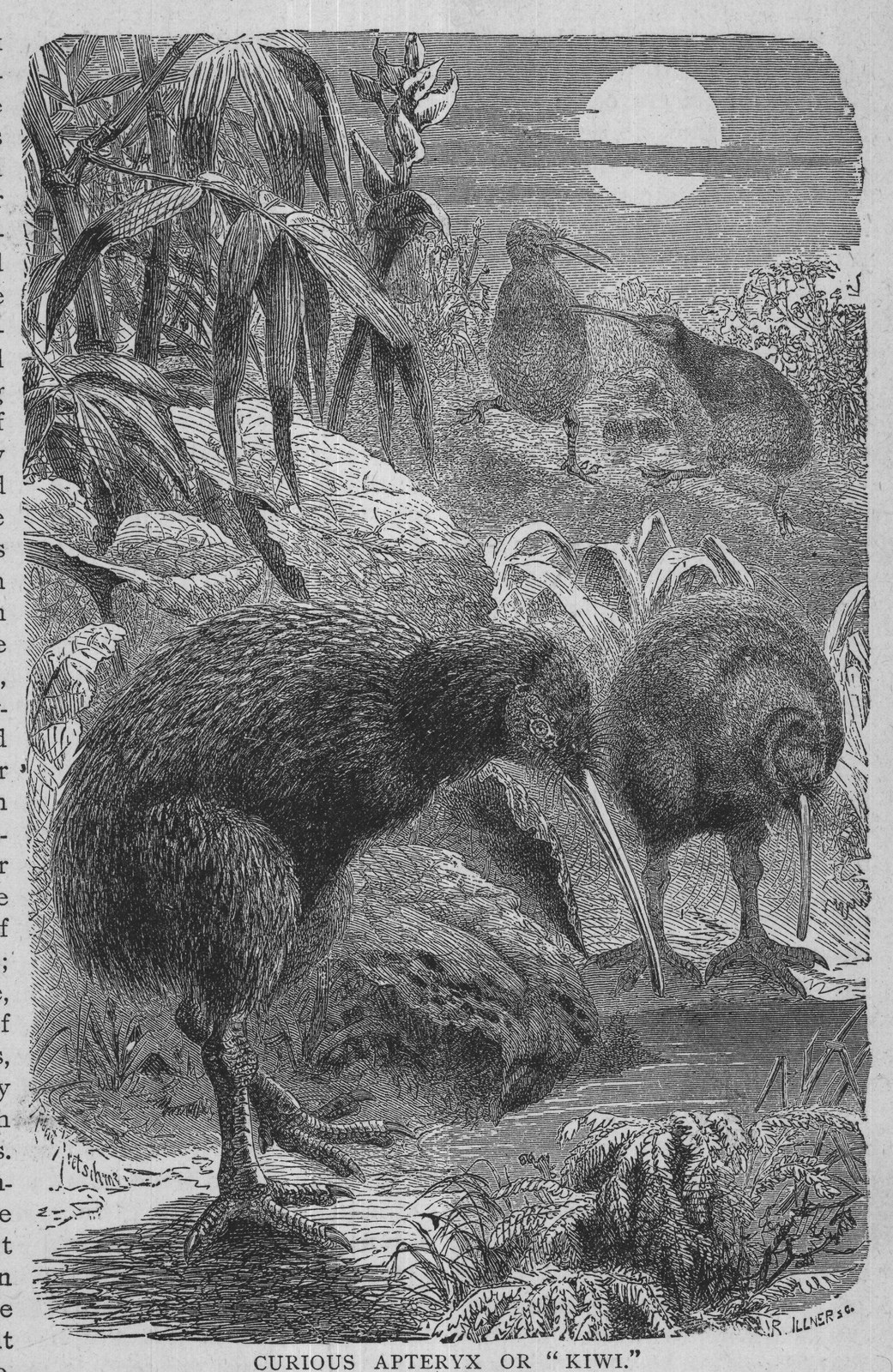
The Long-legged Heron. land and belongs to the Ostrich family. One of the most remarkable of the These birds are found in extensive and feathered tribes is the Heron. The length thick beds of ferns, in which they hide. of the legs in the Heron and their neigh- They are nocturnal and feed on worms, bors appears in a singular fashion to comsnails, insects and larvæ, run swiftly and pensate these birds for the lack of the defend themselves with their powerful great tail-feathers which serve in other feet. Their name is derived from the birds to steer and guide their flight. In apparent absence of wings, those mem- the flight of the Heron, the long legs are bers being merely rudimentary. When stretched out behind the body of the bird hunted by dogs, it seeks refuge among as it flies, and the bird can be recognized rocks and in the chambers which it ex- from a great distance by the peculiar cavates in the earth. In these chambers appearance thus assumed. its nest is made and the eggs laid.
The voice of the Heron is anything but The natives hunt it with great eager- musical; it would not be considered a ness, as the skin is used for the dresses of captivating singer. It is an interesting chiefs, who can hardly be persuaded to fact that by their voices birds express part with a single skin. The bird has a their fear, joy, terror or happiness; and singular habit of resting with the tip of possibly the flock of birds is kept together his bill placed on the ground. The nos- by chirp answering chirp. trils of the Apteryx are placed almost at There are all varieties of colors among the very extremity of the bill. The ab- birds. Males of the humming-birds are origines of New Zealand give it the name gorgeously decorated, while the females of Kiwi-Kiwi. Their eggs are extraordi- are plain-colored. The male bell-bird of narily large and weigh about one-fourth South America is pure white; the females as much as the female bird. are of a dusky green hue. Male birds at The islands of New Zealand, situated large are given to the display of their to the east of Australia, are still further charms and beauties before the eyes of removed than that continent from the their partners. The male birds of Paragroups of islands in the Indian Ocean; dise in particular exhibit their elegant but, in spite of their distance, it is in these plumage to the best advantage; they are latter that we find the nearest approach beauties, anyway, and they seem to know to the singular wingless birds just de- it. scribed. The Dodo which was brought The Great Heron of America, nowhere to England and preserved in museums numerous, may be considered as a conmore than two centuries ago, and figures stant inhabitant of the Atlantic States, from New York to East Florida. As a rare visitor it has been found even as far north as Hudson's Bay, and passes the breeding season in small numbers along the coasts of all the New England States, and the adjoiningparts of British America. In the tops of the tallest trees, the wary Herons, associated to the number of ten or fifteen pairs, construct their nests, each one in the top of a single tree; these are large, formed of coarse sticks, and merely lined with smaller twigs.
The eggs, generally four, are somewhat larger than those of the hen, of a light greenish blue, 2 and destitute of spots. The young are become extremely fat and full-grown be- CURIOUS APTERYX OR "KIWI."