Home › The Sea-Serpent › The Sea-Serpent: Davidson
The Sea-Serpent: Davidson
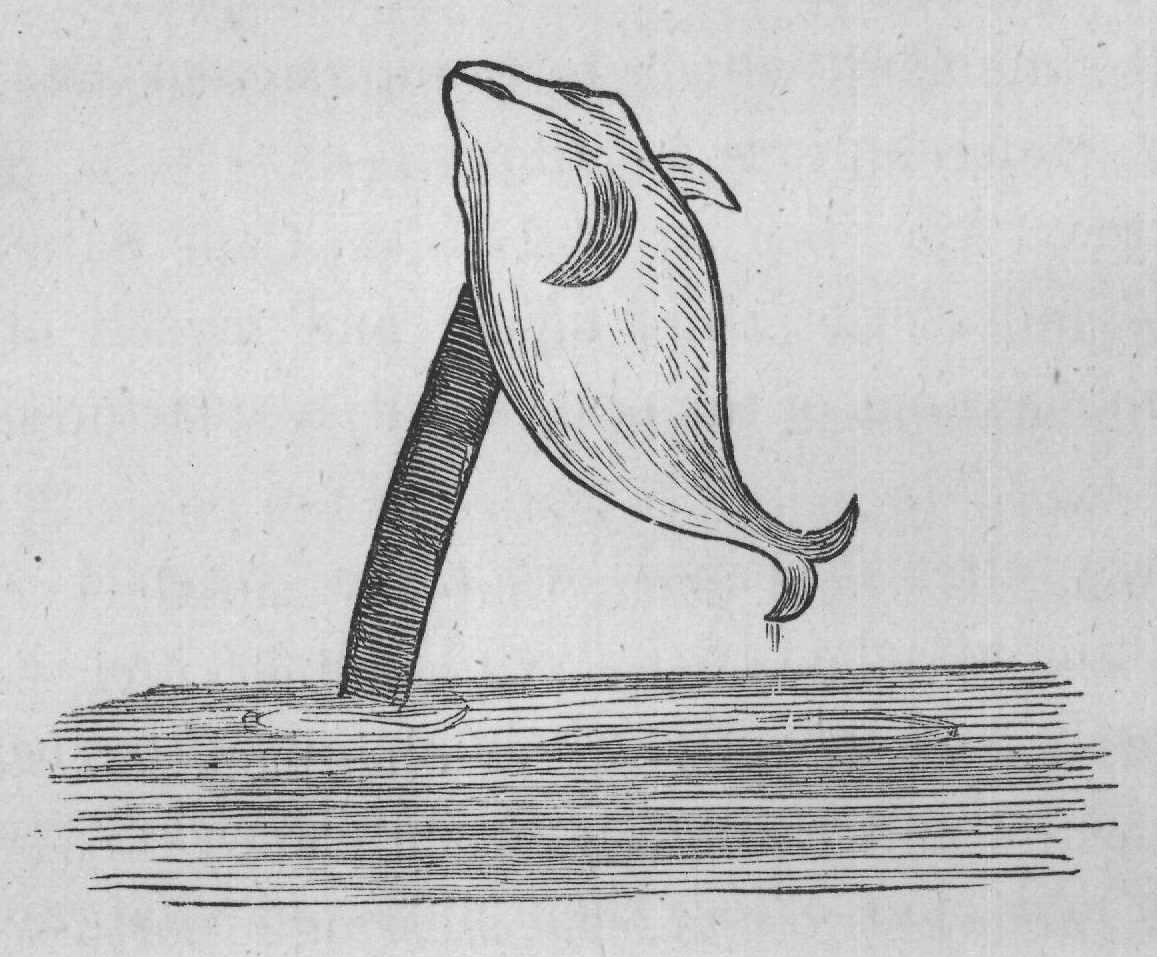
FIG. 75.--SEA-SERPENT ATTACKING WHALE. (From Sketches by Capt. Davidson, S.S. " Kiushiu-maru.") whale was trying to escape, as he spouted but once at a time on coming to the surface, and the last time he appeared he went down before the serpent came up."
A remarkable and independent corroboration of modern date comes from the Japan seas. It was reported both in 1 local papers and in the San Francisco Californian Mail-Bag for 1879, from which I extract the notice and the illustrative cuts (Fig. 75). "The accompanying engravings are fac-similes of a sketch sent to us by Captain Davidson, of the steamship Kiushiumaru,* and is inserted as a specimen of the curious drawings which are frequently forwarded to us for insertion. Captain Davidson's statement, which is countersigned by his chief officer, Mr. McKechnie, is as follows :- ""Saturday, April 5th, at 11.15 A.M., Cape Satano distant about nine miles, the chief officer and myself observed a whale jump clear out of the sea, about a quarter of a mile away. "Shortly after it leaped out again, when I saw there was something attached to it. Got glasses, and on the next leap distinctly saw something holding on to the belly of the whale. The latter gave one more spring clear of the water, and myself and chief officer then observed what appeared to be a creature of the snake species rear itself about thirty feet out of the water. It appeared to be about the thickness of a junk's mast, and after standing about ten seconds in an erect position, it descended into the water, the upper end going first. With my glasses I made out the colour of the beast to resemble that of a pilot fish."
There is an interesting storyt of a fight between a watersnake and a trout, by Mr. A. W. Chase, Assistant United States Coast Survey, which, magnis componere parva, may be accepted as an illustration of how a creature of serpentine form would have to deal with a whale; only, as on the surface or in mid-water it would be prevented from grasping any rocks by which to anchor itself, we may readily conceive it * This is one of the fleet of the important Japanese Mitsu Bish Company, the equivalent of the P. and O. Company in Japan. † Pop. Sci. Monthly, No. 56, December 1876, p. 234. holding on with a tenacious grip of its extended jaws, and drawing itself up to the enemy until it could either embrace it in its coils or stun it with violent blows of the tail.* "The trout, at first sight, was lying in mid-water, heading up stream. It was, as afterwards appeared, fully nine inches in length.
This new enemy of the trout was a large water-snake of the common variety, striped black and yellow. He swam up the pool on the surface until over the trout, when he made a dive, and by a dexterous movement seized the trout in such a fashion that the jaws of the snake closed its mouth. The fight then commenced. The trout had the use of its tail and fins, and could drag the snake from the surface; when near the bottom, however, the snake made use of its tail by winding it round every stone or root that it could reach. After securing this tail-hold, it could drag the trout towards the bank, but on letting go the trout would have a new advantage. This battle was continued for full twenty minutes, when the snake managed to get its tail out of the water and clasped around the root of one of the willows mentioned as overhanging the pool. The battle was then up, for the snake gradually put coil after coil around the root, with each one dragging the fish toward the land. When half its body was coiled it unloosed the first hold, and stretched the end of its tail out in every direction, and finding another root, made fast; and now, using both, dragged the trout on the gravel bank. It now had it under control, and, uncoiling, the snake dragged the fish fully ten feet up on the bank, and, I suppose would have gorged him," &c. &c. * It must be remembered that it is with a blow of its powerful tail that the alligator stuns its prey and knocks it into the water (when any stray animal approaches the bank), and it is with the tail that the dragon, in the fable related by Ælian, chastises, although gently, its mistress, and constricts, according to Pliny, the elephant in its folds.