Home › The Deluge Not a Myth › The Deluge Not a Myth: Dynasty
The Deluge Not a Myth: Dynasty
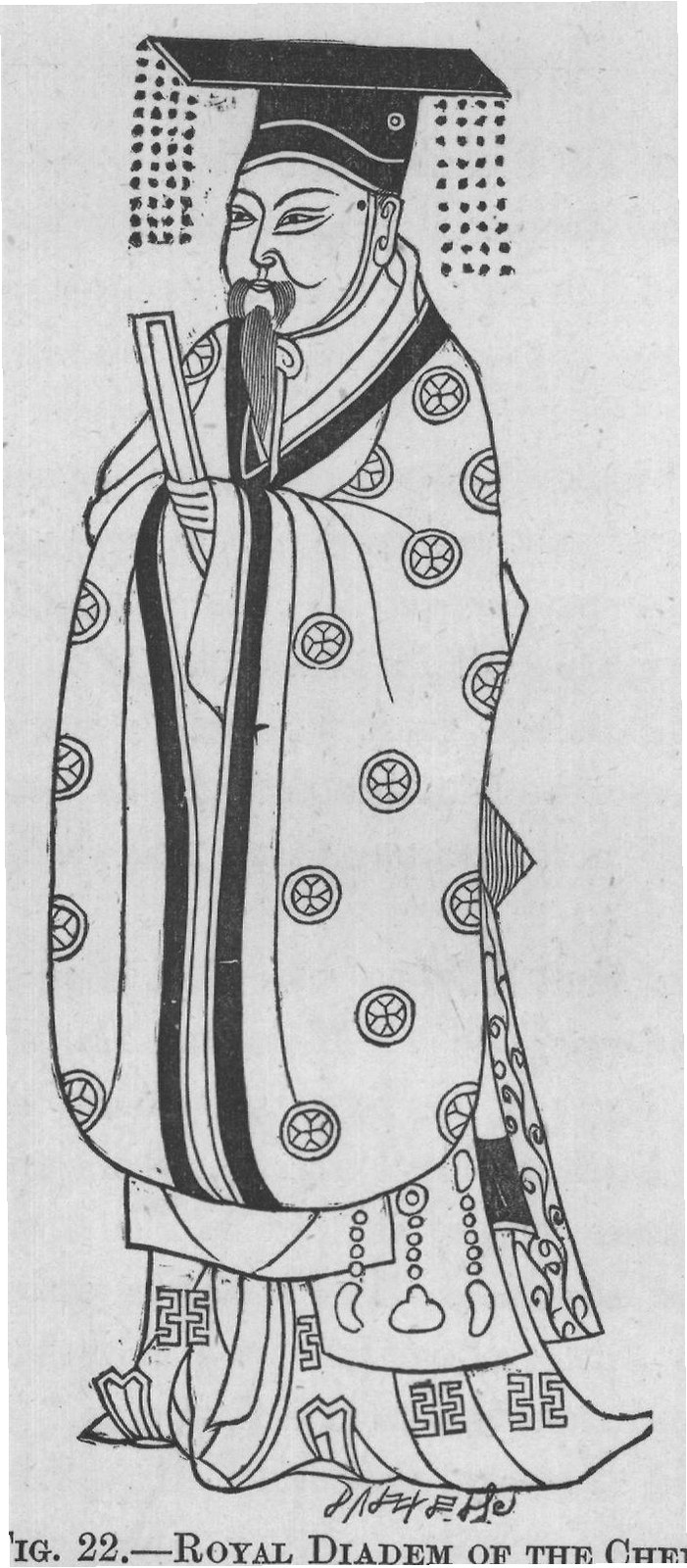
FIG. 22. ROYAL DIADEM OF THE CHEN DYNASTY. (From the San Li T'u.) † An interesting line of investigation might be opened up as to the origin of inventions and the date of their migrations. The Chinese claim the priority of many discoveries, such as chess, printing, issue of bank-notes, sinking of artesian wells, gunpowder, suspension bridges, the mariner's compass, &c. &c.
I extract two remarkable wood-cuts from the San Li Tu, one appended here showing the origin of our college cap; the other, in the chapter on the Unicorn, appearing to illustrate the fable of the Sphynx.
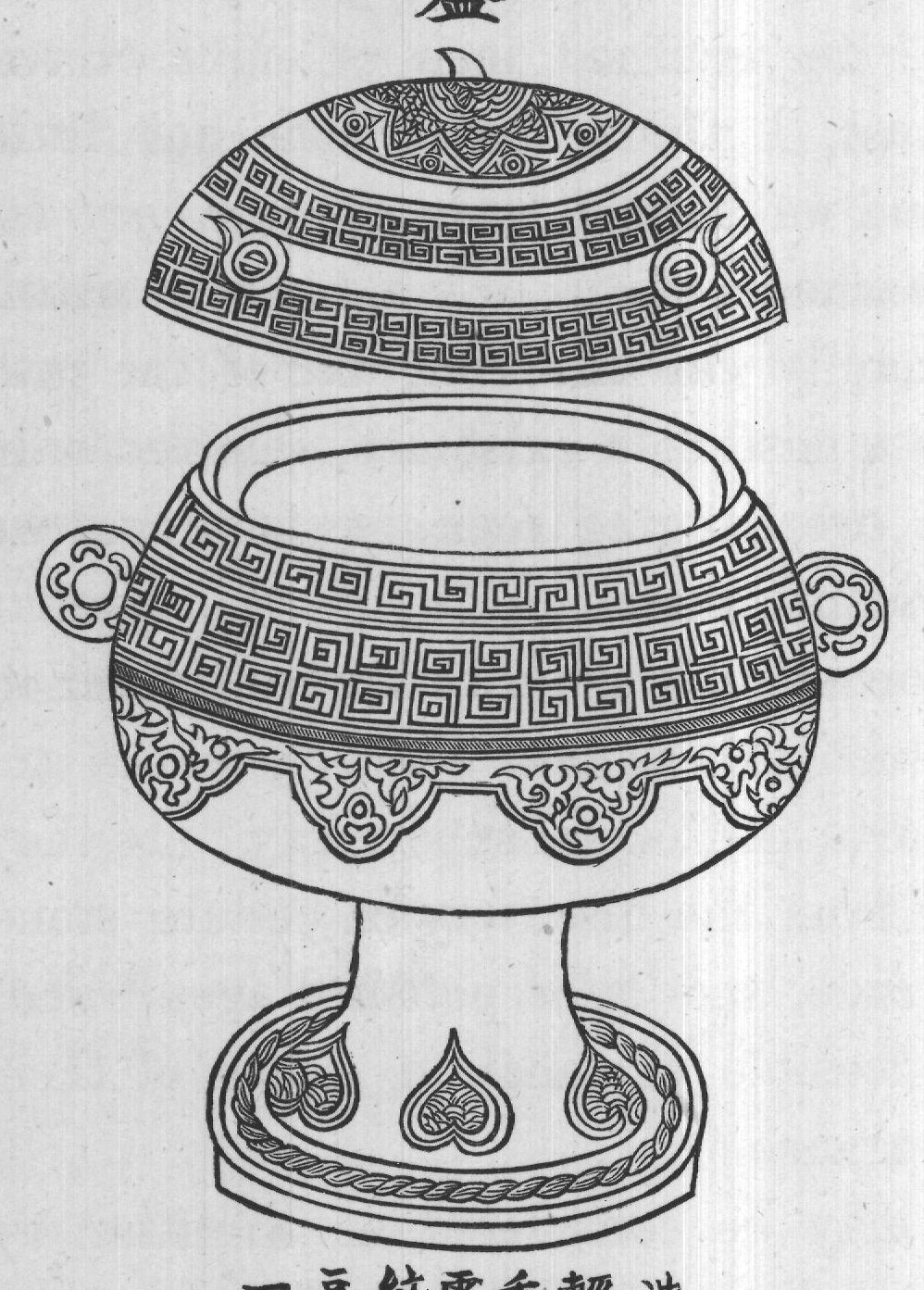
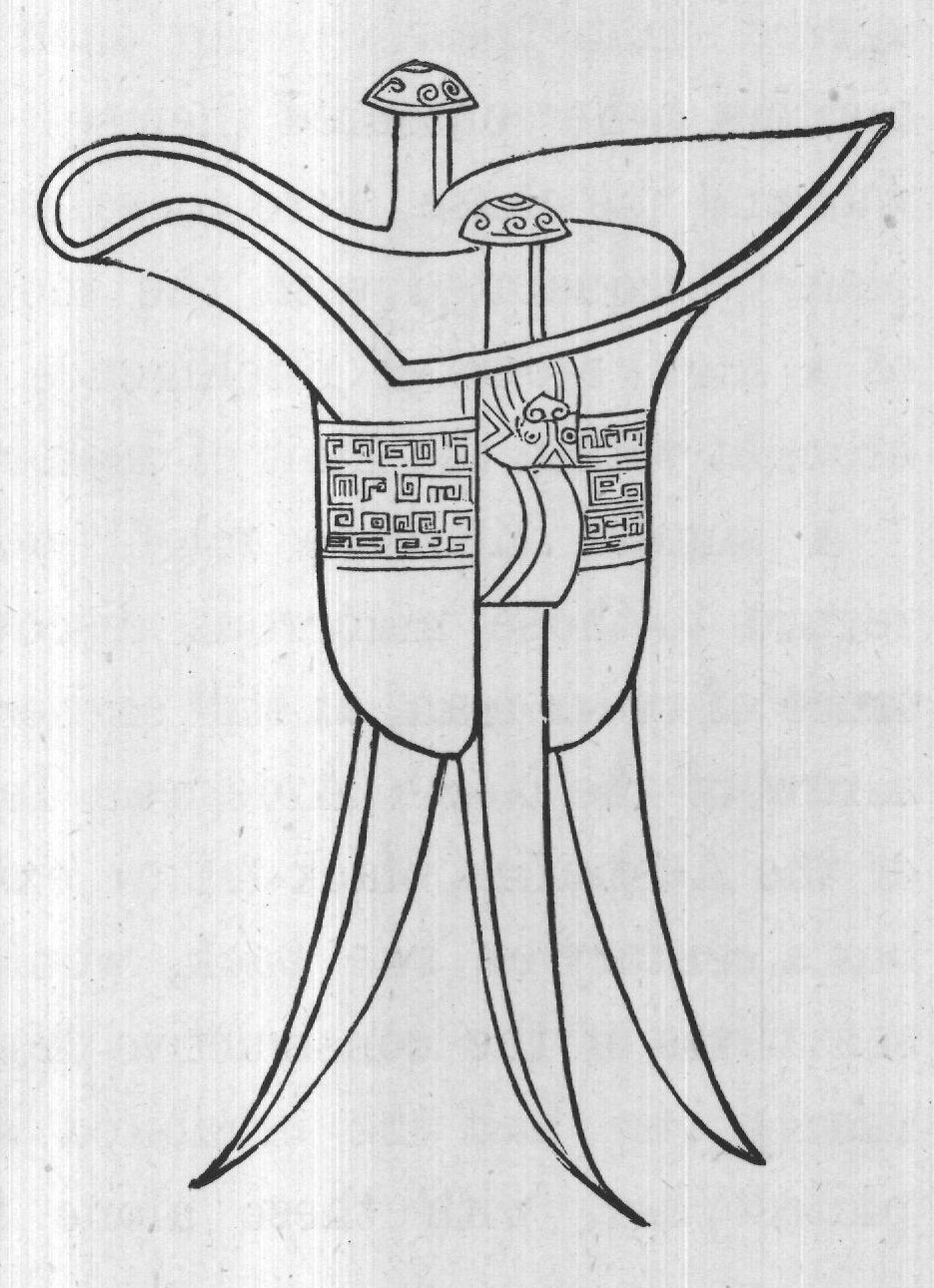
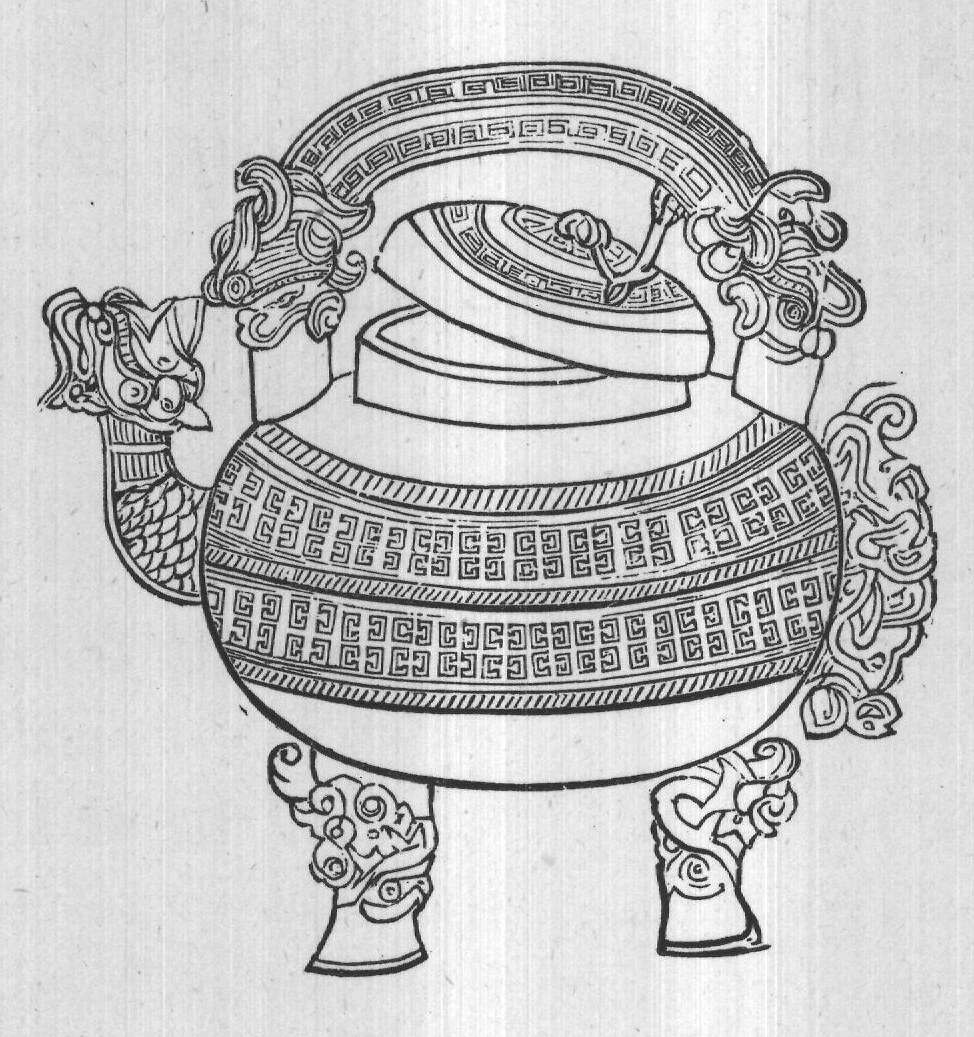
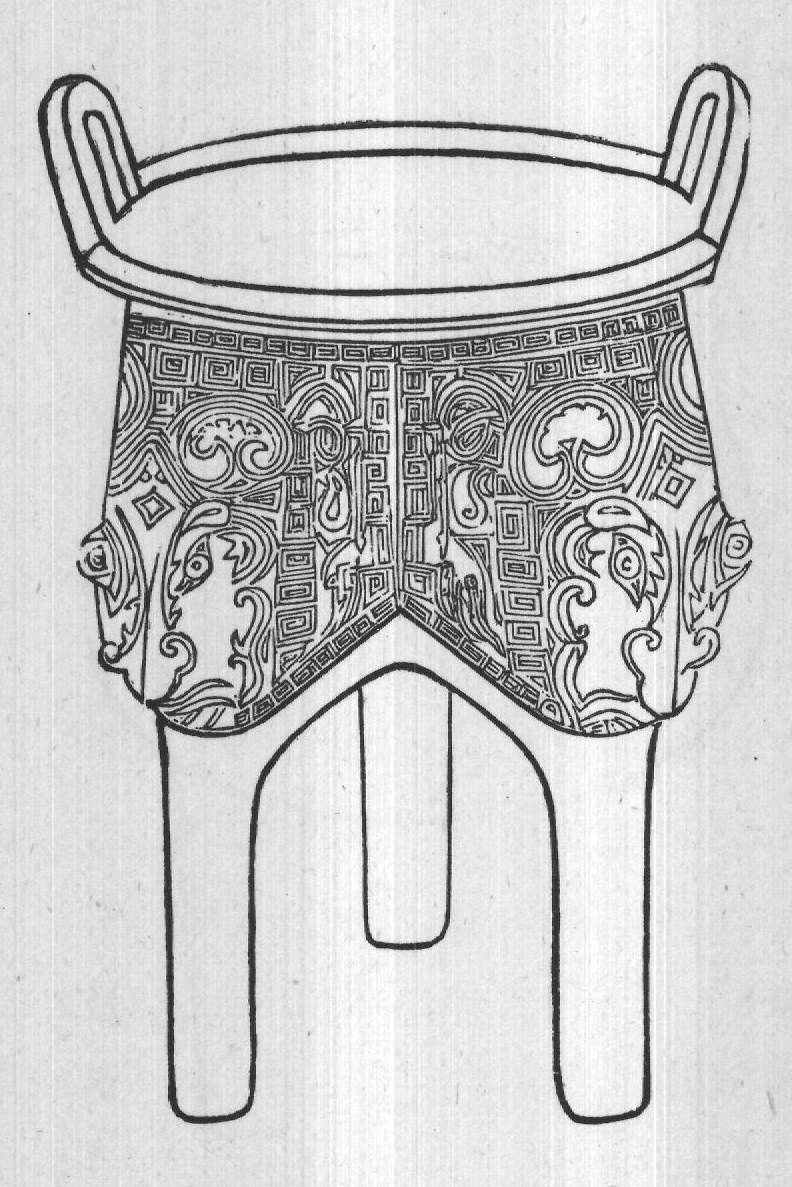
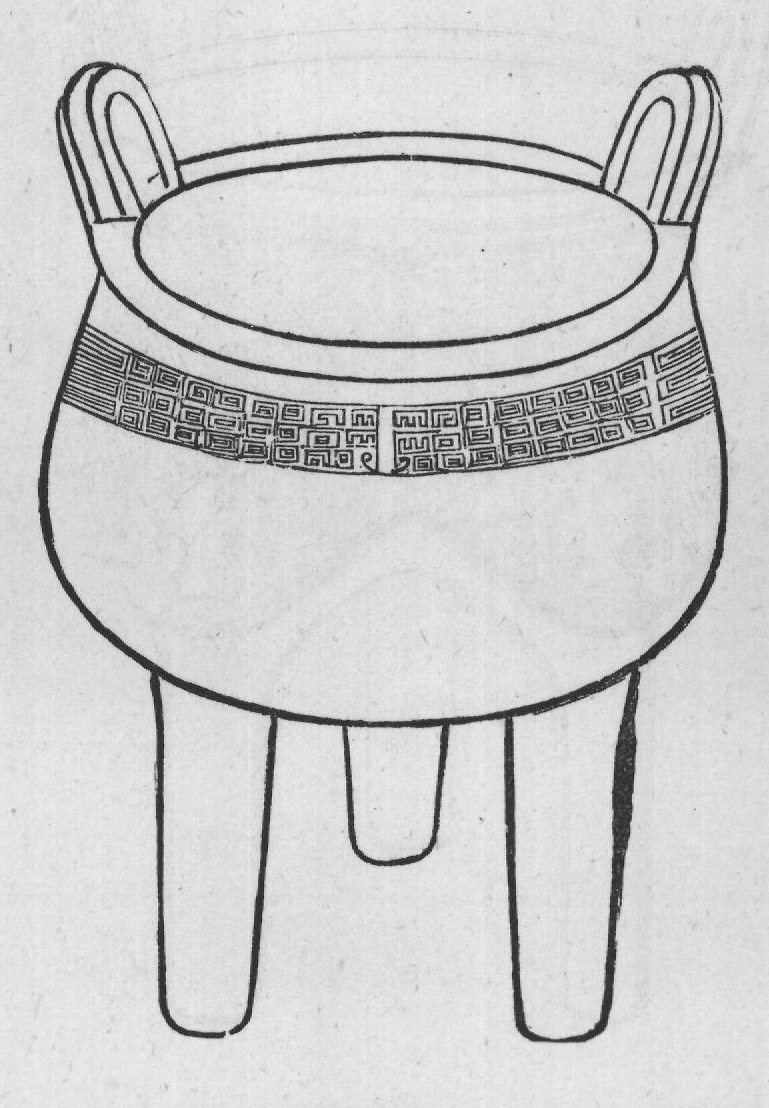
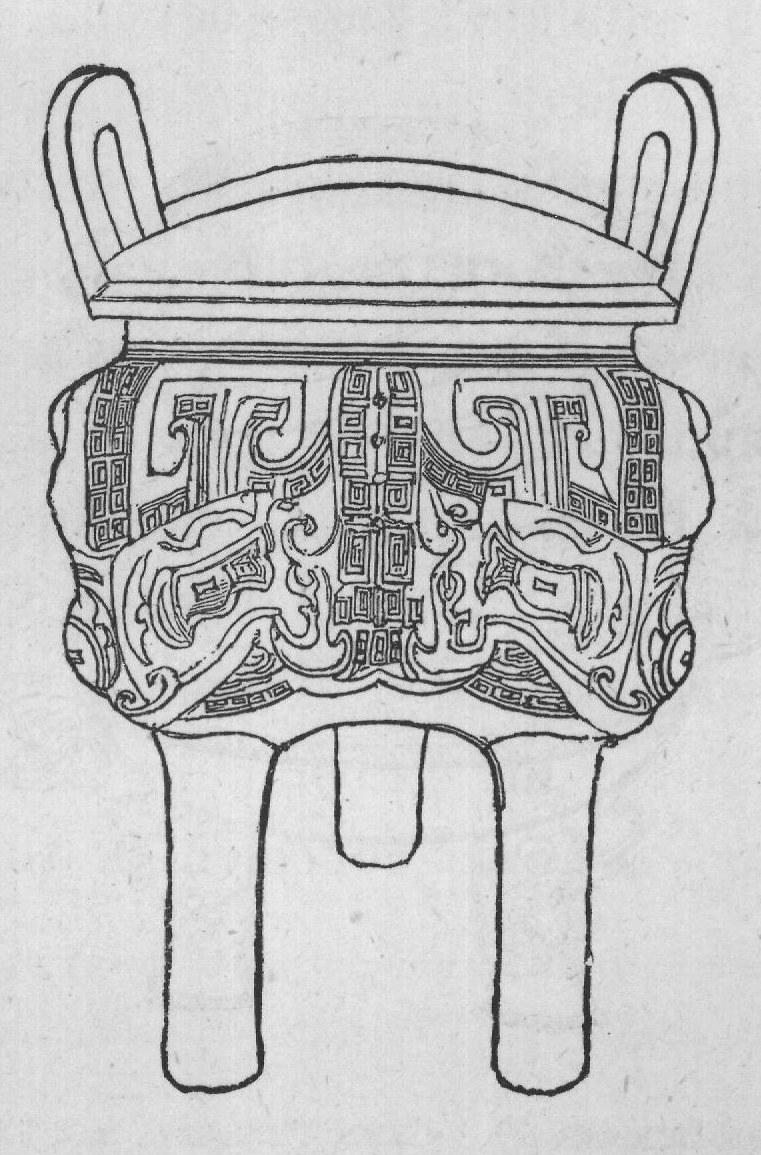
I also give a series of engravings, reduced facsimiles of those contained in a celebrated Chinese work on antiquities, showing the gradual evolution of the so-called Grecian pattern or scroll ornamentation, and origination of some of the Greek forms of tripods. 盎 G 一豆紋雷重輕、漢 FIG. 24. CYATHUS OR CUP FOR LIBATIONS.
SHANG DYNASTY, B.C. 1766 to B.C. 1122. (From the Poh Ku T'u.) FIG. 23. VASE. HAN DYNASTY B.C. 206 to A.D. 23. (From the Poh Ku T'u.) مم those who fringe the civilization of the present period. Intellectually measured, the civilized men of eight or ten thousand years ago must, I think, have been but little inferior to ourselves, and we should have to peer very far back indeed before we reached a status or condition in which the highest type of humanity was the congener of the cave lion, disputing with him a miserable existence, shielded only from the elements by an overhanging rock, or the fortuitous discovery of some convenient cavern.
If this be so, we are forced back again to the consideration of the questions with which this section opened; where are the evidences of man's early intellectual superiority? are they limited to those deduced from the discovery of certain stone implements of the early rude, and later polished ages? and, if so, can we offer any feasible explanation either of their non-existence or disappearance?
In the first place, it may be considered as admitted by archæologists that no exact line can be drawn between the later of the two stone-weapon epochs, the polished Neolithic stone epoch, and the succeeding age of bronze. They are agreed that these overlap each other, and that the rude hunters, who contented themselves with stone implements of war and the chase, were coeval with people existing in other places, acquainted with the metallurgical art, and therefore of a high order of intelligence. The former are, in fact, brought within the limit of historic times.
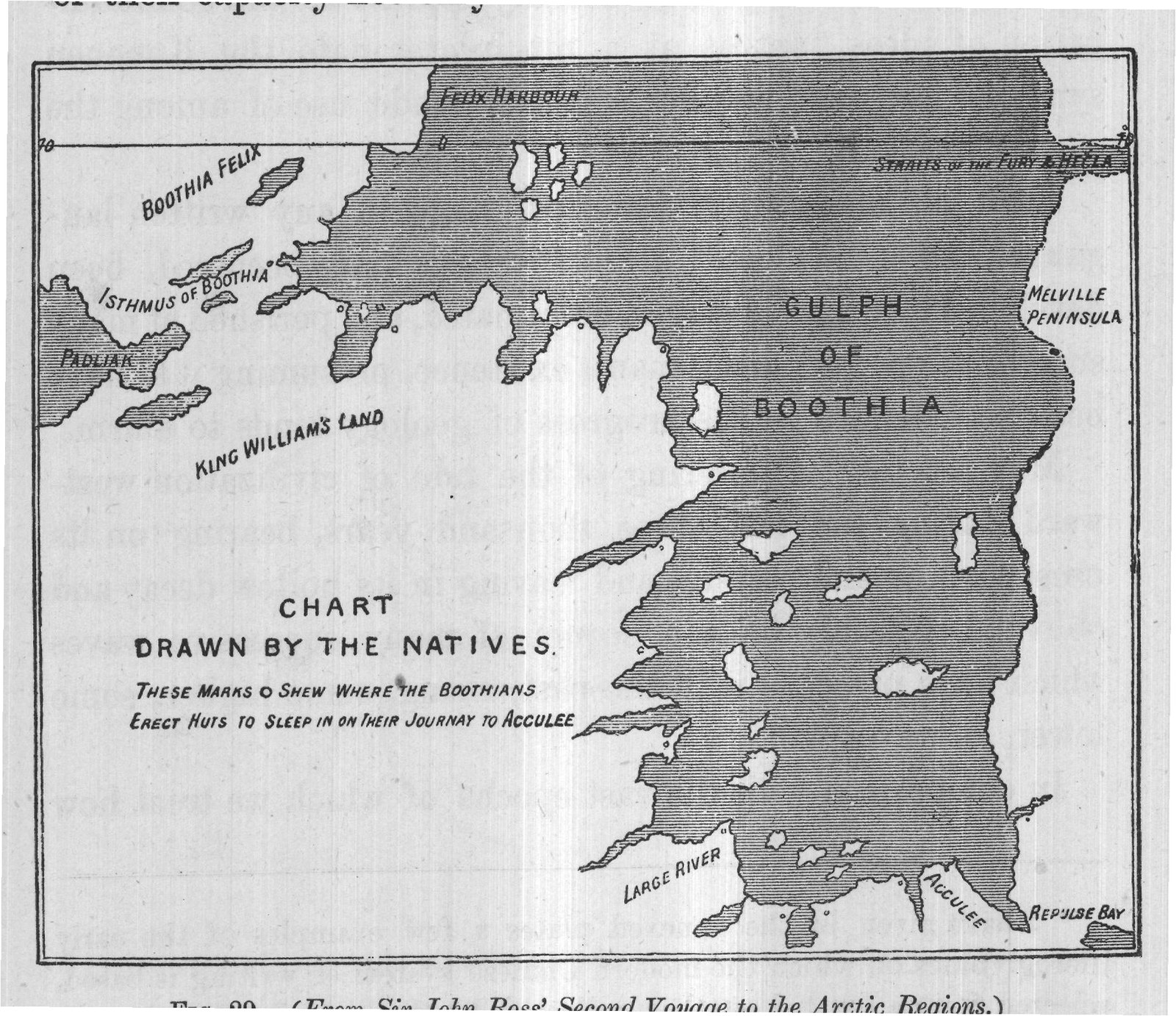
A similar inference might not unfairly be drawn with regard to those numerous discoveries of proofs of the existence of ruder man, at still earlier periods. The flint-headed arrow of the North American Indian, and the stone hatchet of the Australian black-fellow exist to the present day; and but a century or two back, would have been the sole representatives of the constructive intelligence of humanity over nearly one half the inhabited surface of the world. No philosopher, with these alone to reason on, could have FIG. 25. INCENSE BURNER (?). CHEN DYNASTY, B.C. 1122 to в.c. 255. (From the Poh Ku T'u.) FIG. 26. TRIPOD OF THE SHANG DYNASTY. Probable date, B.c. 1649. (From the Poh Ku T'u.) B FIG. 27.-TRIPOD OF FU YIH, SHANG DYNASTY. (From the Poh Ku T'u.) FIG. 28.-TRIPOD OF KWAI WAN, CHEN DYNASTY, B.C. 1122 to в.c. 255 (From the Poh Ku T'u.) 70 imagined the settled existence, busy industry, and superior intelligence which animated the other half; and a parallel suggestive argument may be supported by the discovery of human relics, implements, and artistic delineations such as those of the hairy mammoth or the cave-bear. These may possibly be the traces of an outlying savage who co-existed with a far more highly-organized people elsewhere,* just as at the present day the Esquimaux, who are by some geologists considered as the descendants of Palæolithic man, co-exist with ourselves. They, like their reputed ancestors, have great ability in carving on bone, &c.; and as an example of their capacity not only to conceive in their own minds a BOOTHIA FELIX ISTHMUS OF BOOTHIA PADLIAK FEUX HARBOUR KING WILLIAM'S LAND GULPH OF BOOTHIA CHART DRAWN BY THE NATIVES.