Home › Contents › Remarkable Plants and Trees
Remarkable Plants and Trees
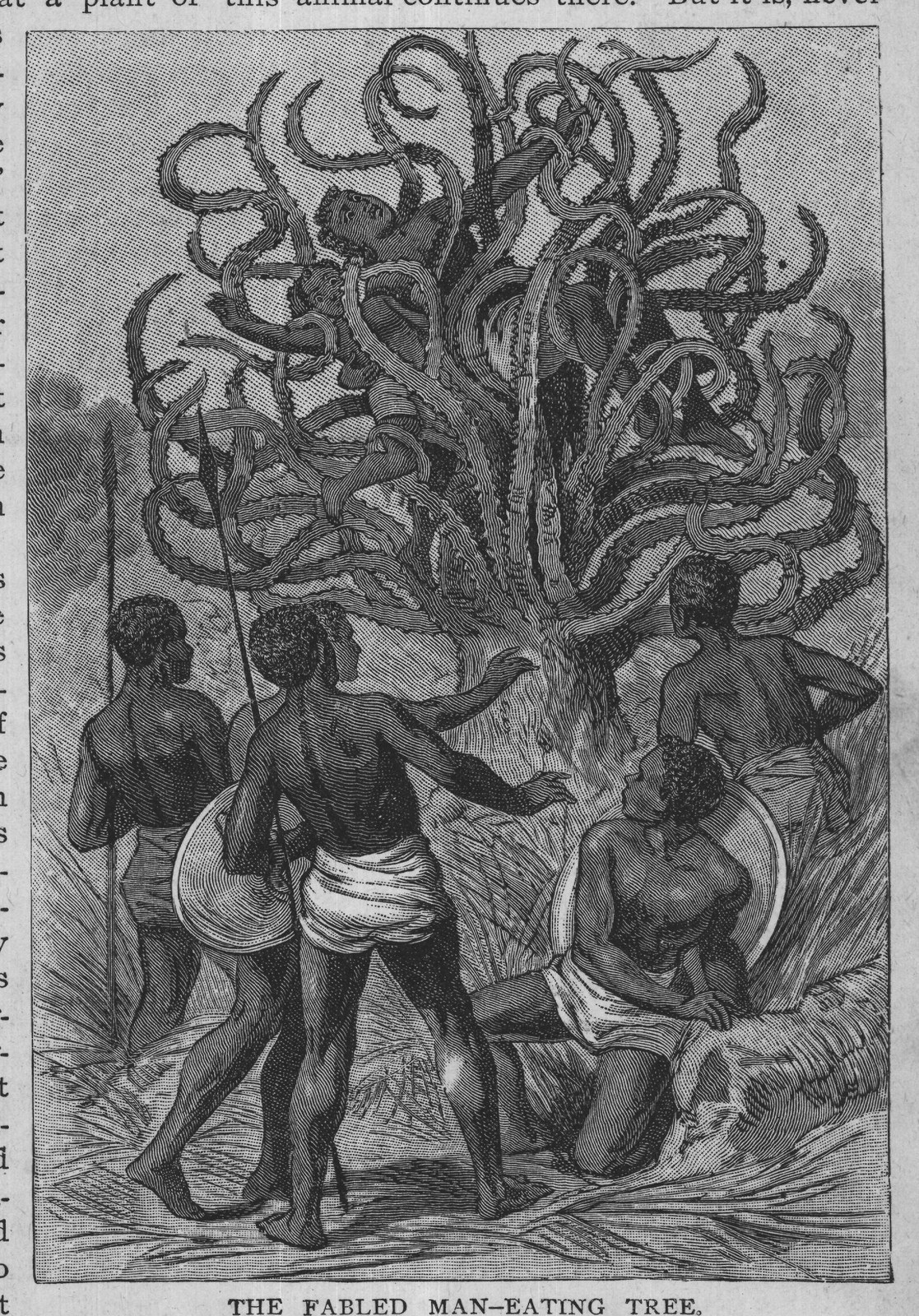
N the whole range For several centuries there had been of vegetable crea- strange rumors of huge plants in the tion it will be diffi- more remote and unvisited parts of the cult to find any- Oriental countries, which would imprison thing more curious and destroy even large animals and men than the carniv- who ventured within reach of their great orous or flesh-eat- quivering leaves armed with hooked ing plants. We thorns, and would absorb the flesh of the think without any dead victims into their structure. Asia emotion of curi- has always been the land of mystery and osity of animals marvel, but, like many another story of eating plants, for that far-off land, the giant flesh-eating this is the common law of Nature. But tree or plant has so far proved to be a here we have the reverse marvel of plants mere myth. devouring animals. It is not many years Science has discovered, however, that ago that the attention of naturalists was there is a foundation for this exciting first specially called to the habits and fiction, and it has not needed to go to the character of these strange forms of vege- distant iands of the East to find it, for table life, though they have been known flesh-eating plants are by no means unfor about a century. It is Mr. Darwin, common in this country and Europe. the celebrated philosopher, who has made These plants, however, confine their deso many wonderful discoveries in natural structive propensities to the flying and science-discoveries which have excited crawling insects which are beguiled to rest more discussion than those of any scien- on their leaves. Such a strange provision tific man of his age, perhaps of all ages of Nature is no less interesting than if the who has done most to explain the opera- carnivorous plants had the power to detions of the flesh-eating plants. stroy the larger animals, for it is the fact itself which startles the attention from its of each lobe among the glands, that effectu. seeming reversal of ordinary laws. ally put an end to its struggles. Nor do To use the words of Mr. Darwin, there the lobes ever open again while the dead can be no doubt that a plant of this animal continues there. But it is, neverdescription "digests exactly the same substances and in exactly the same way that the human stomach does."
Let us take as a first example the plant known as Venus's-Flytrap. About the year 1768, Mr. Ellis, an English naturalist, sent to the great Swedish botanist, Linnæus, the following description of this plant: "The plant shows that Nature may have some views toward its nourishment in forming the upper joint of its leaf like a machine to catch food. Upon the middle of this lies the bait for the unhappy insect that becomes its prey. Many minute red glands which cover its surface, and which perhaps discharge sweet liquor, tempt the animal to taste them, and the instant those tender parts are irritated by its feet the two lobes rise up, grasp it