Home › Contents › Ferocious Sword-Fish Capturing His Prey
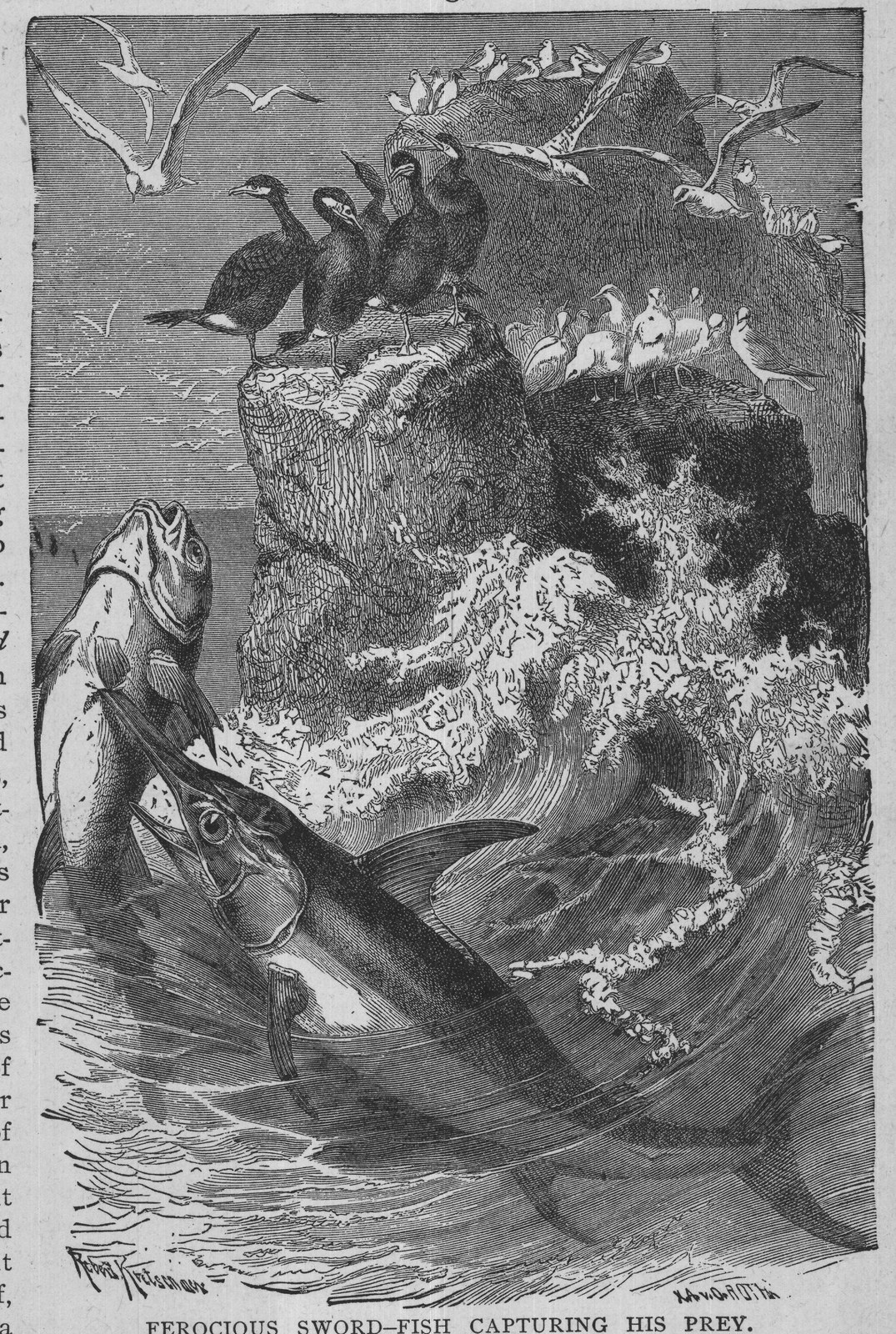
Ferocious Sword-Fish Capturing His Prey
coarse kind of ivory. The fish is supposed then passed through three inches of plank, to have followed the ship when under and beyond that four inches and a half into the timber. The force requisite to There have been, both among the aneffect this must have been very great, cients and the moderns, many stories especially as the shock was not felt by the about the Narwhal's tooth. It was forpersons on board. merly considered to be like the horn of A few years ago the captain of an East the unicorn, which was situated on the Indiaman reported another instance of the middle of the forehead. This fabulous wonderful strength which the Sword-fish being resembled, they said, the horse and occasionally exhibits. The bottom of his the stag. Aristotle and Pliny have deship had been pierced through in such a scribed it, and it is represented on many manner that the sword was completely ancient monuments. It was adopted by imbedded and the fish killed by the the chivalry of the Middle Ages, and has violence of the effort. often decorated the trophies in military The Sword-fishes and the whales are fêtes. great enemies. They never meet with- In former times people attributed to out coming to battle. Sometimes two the tooth of the Narwhal, which they Sword-fishes make common cause against called the tooth of the unicorn, marvellous a whale, and the battle often lasts until medicinal virtues. They considered it an the Sword-fish loses sight of the whale, infallible antidote to all poisonous comwhich is at length compelled to swim off, pounds; they were persuaded that it his superior agility enabling him to do counteracted all the hurtful properties of this. In the Sword-fish piercing the venomous substances. Charles IX, dreadwhale's body with its sword, it seldom ing lest he should be poisoned, was very does great harm to the animal from not careful to put into his cup of wine a piece being able to penetrate much beyond the blubber.
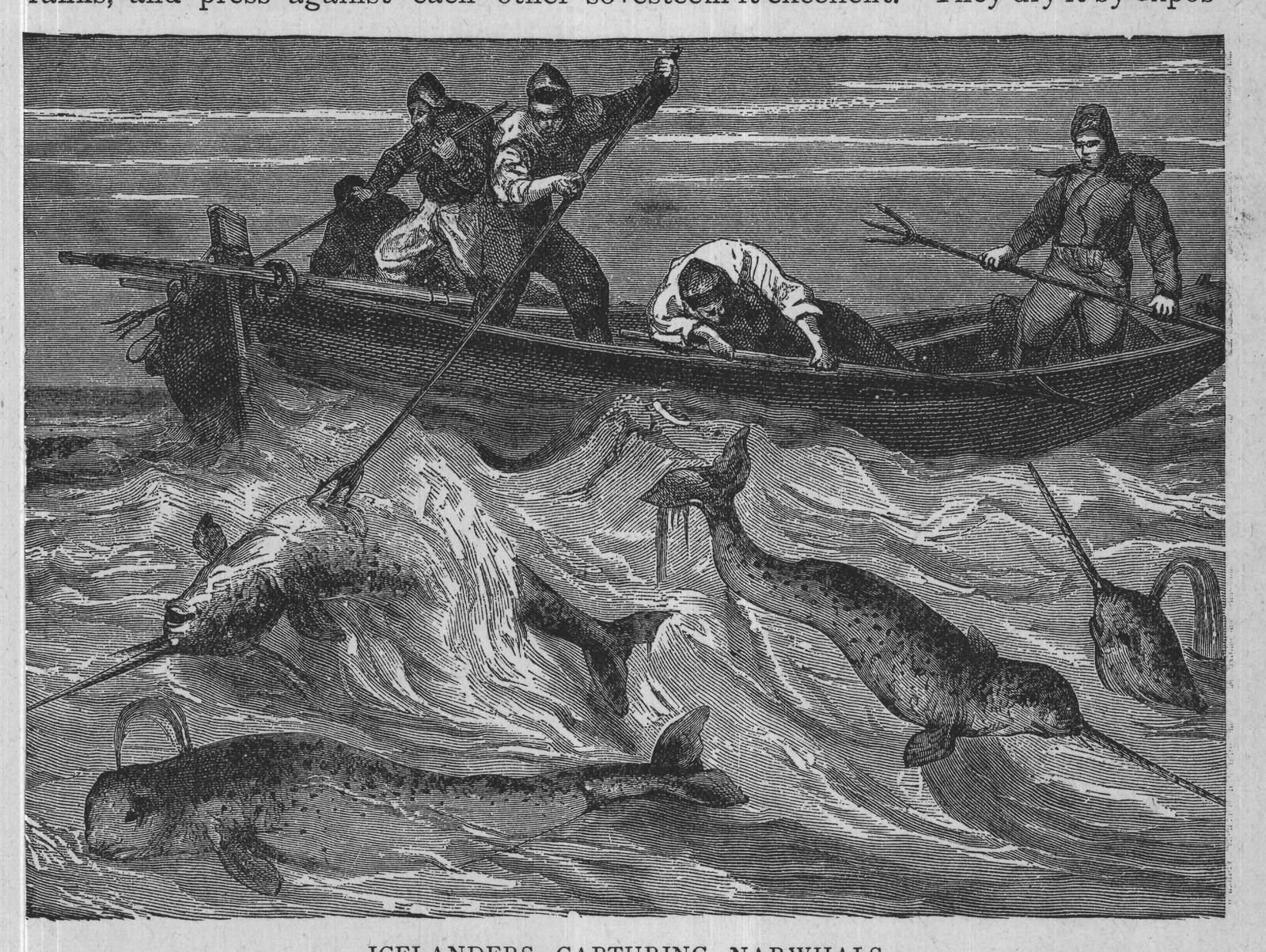
The Famous Narwhal. of the sea-unicorn's tooth. Ambroise Paré was the first who dared to lift up his voice against such errors. Very soon Narwhals differ very little from por- after the unicorn ceased to be an object poises in their general form and the color of exorbitant price on account of its supof their bodies; but at the first glance posed virtues. It then passed from the they are easily to be distinguished from apothecary's laboratory to the naturalist's all other cetaceans by the singular tusk collection, where it was long preserved with which Nature has provided them. under the name of horn or tusk of the Of the two incisive teeth implanted in unicorn. the upper jaw of the Narwhal, one is The Narwhal's Tusk. almost entirely wanting, whilst the other The true nature of this horn was shown is prodigiously lengthened in a straight for the first time by a naturalist, who had line, and is simply an enormous stiletto, found it affixed in its socket in a skull which is rounded with a spiral fluting, a similar to that of a whale. But it was sharp point at the extremity, and which not till 1671 that Frederick Martens gave is of one-third or half the length of the a tolerably correct description of the animal. This strange creature has then Narwhal. These Narwhal live in the but one tooth-and what a tooth! It is, neighborhood of Iceland and in the seas in fact, a sword of ivory. In the Museum which wash the shores of Greenland. at Amsterdam there is a Narwhal skull They gather together in the creeks of the with two fully developed tusks. ice islands, and travel in bands. It would be very difficult to take them if they did The Icelanders manufacture with the not live in troops; for, when isolated, Narwhal's tusks their arrows for the they swim with such rapidity as to escape chase, and the poles which they use in from all pursuit. But when they are the construction of their huts; but they near together they mutually embrace do not eat its flesh, because they believe each other, and are easily caught. When it to be venomous. This is not the case, the fishing-boats glide cautiously in be- however, with the Greenlanders, and tween their long files they close their other inhabitants of the North, who ranks, and press against each other solesteem it excellent. They dry it by expos-