Home › Contents › New Change-Over Palm
New Change-Over Palm
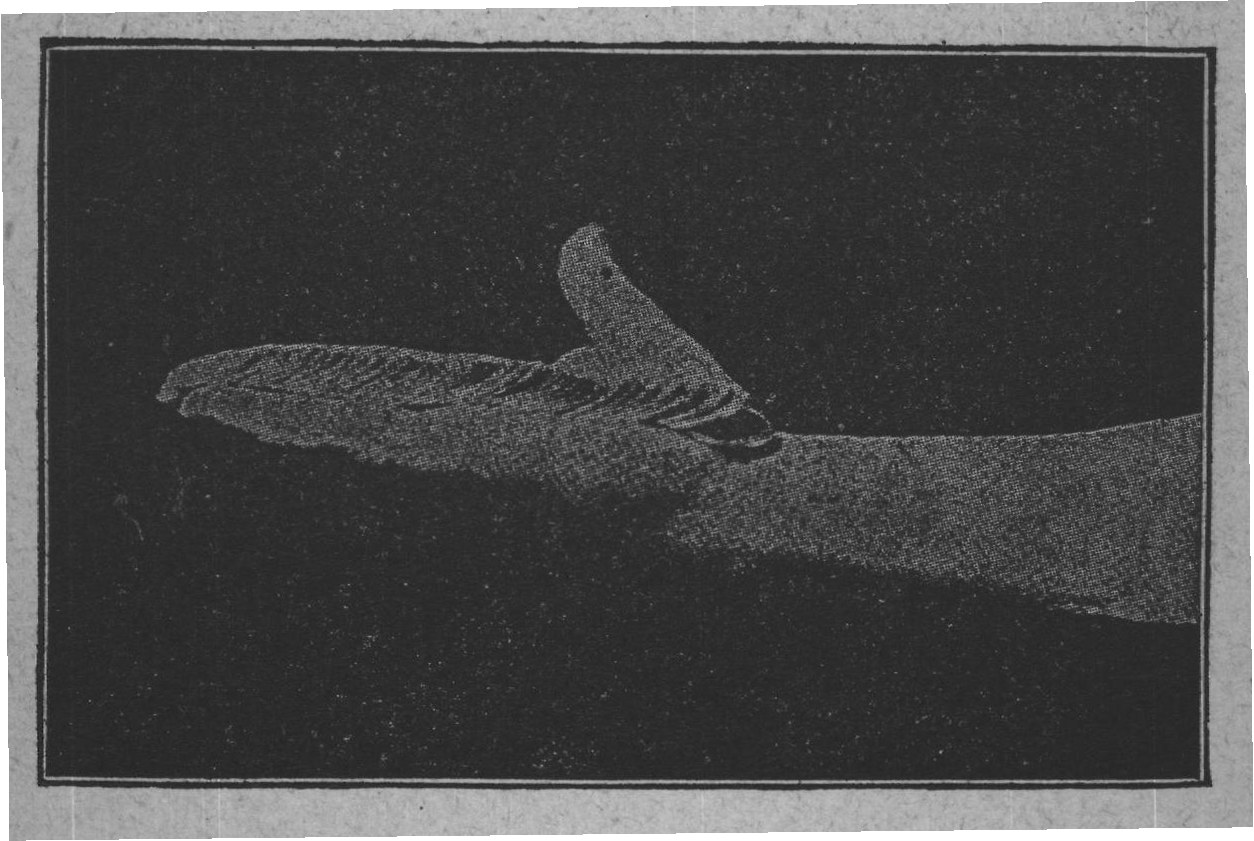
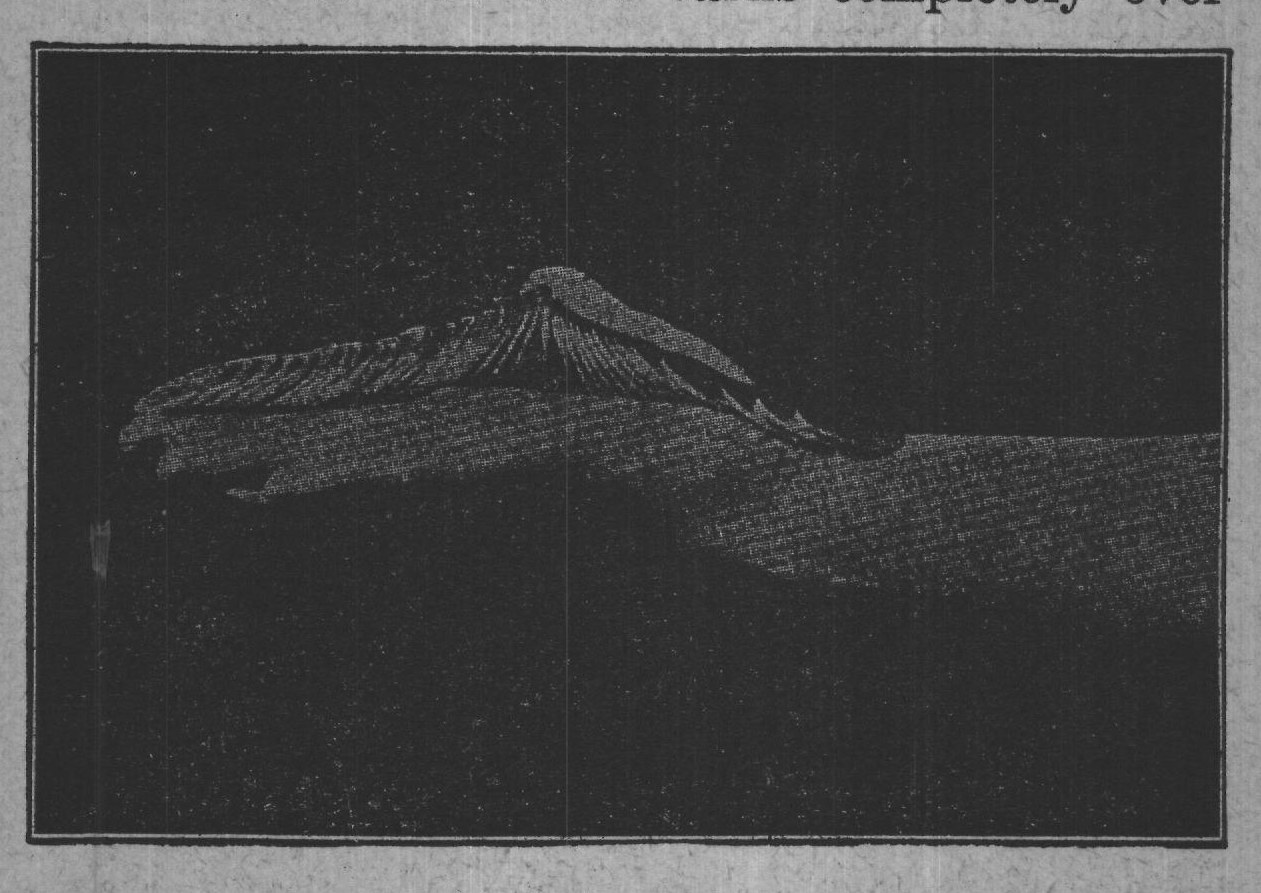
When the left hand is opened, the right hand, which contains the coins palmed, is brought face to face with the left one, and the coins transferred to the palm of the left hand, which is immediately turned round (under cover of the right) to show (apparently) that there is nothing at the back, and then the right hand can be shown empty back and front (see Fig. 21). The left hand is next turned round under cover of the right hand, and the coins re-palmed in right (see Fig. 22). This is an exceedingly difficult sleight, and requires a considerable amount of delicacy in manipulating. It is very desirable to have the coins all of the same size and thickness, otherwise one or more may slide out from the rest in the act of transference.
The coins can then be produced as fancy indicates, by catching them one at a time, or in a fan from the back of the left hand; but a suitable mode of production will readily suggest itself to a performer who has thoroughly mastered the above two passes. The author can safely state that when once proficient in both of the above the performer can do practically just as he likes with half-a-dozen coins, and he therefore considers it one of the most useful passes in existence.
DOWNS' NEW "CLICK" PASS.
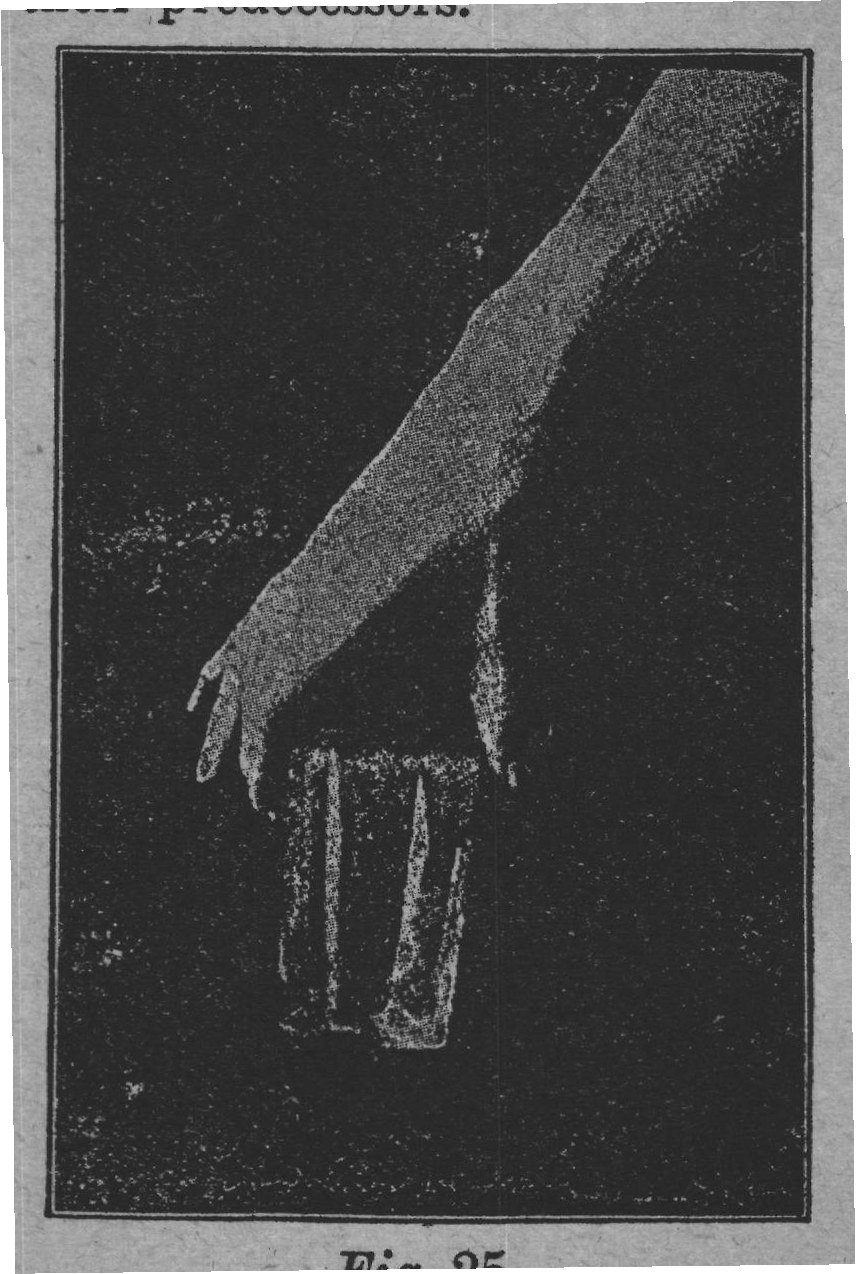
As the trick about to be described relies almost entirely on the above-named new and original "pass," the author has thought it only fair to give it the above title. Once acquired it becomes a most useful and one of the most puzzling and deceptive sleights extant. The mode of performing it is as follows:-Ten coins are borrowed and placed unmistakably in the left hand. All are satisfied that the coins are really in the left hand, they being heard to fall therein. The right hand now picks up an ordinary empty glass tumbler and the hands are held wide apart. The coins are commanded to pass one at a time from the closed left hand into the glass held in the right, which they proceed to do, the beautiful part of the experiment being that each coin is distinctly seen and heard to fall into the tumbler. After about, say, eight coins have passed, the performer pretends to hear someone say that there are no coins in the left hand. He immediately opens the left hand and shows the two remaining coins. The hand is closed, and the two that are left pass singly into the glass held in the right, in the same manner as their predecessors. Fig. 25.
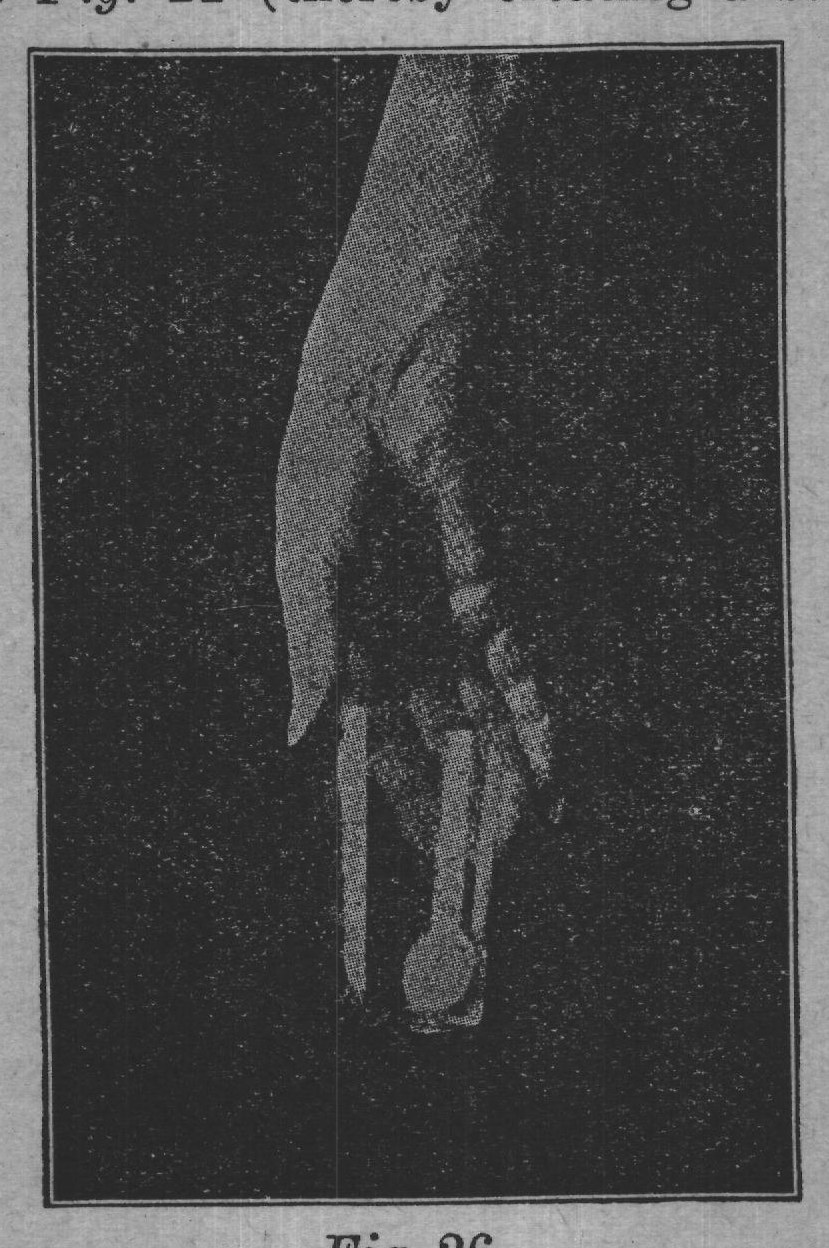
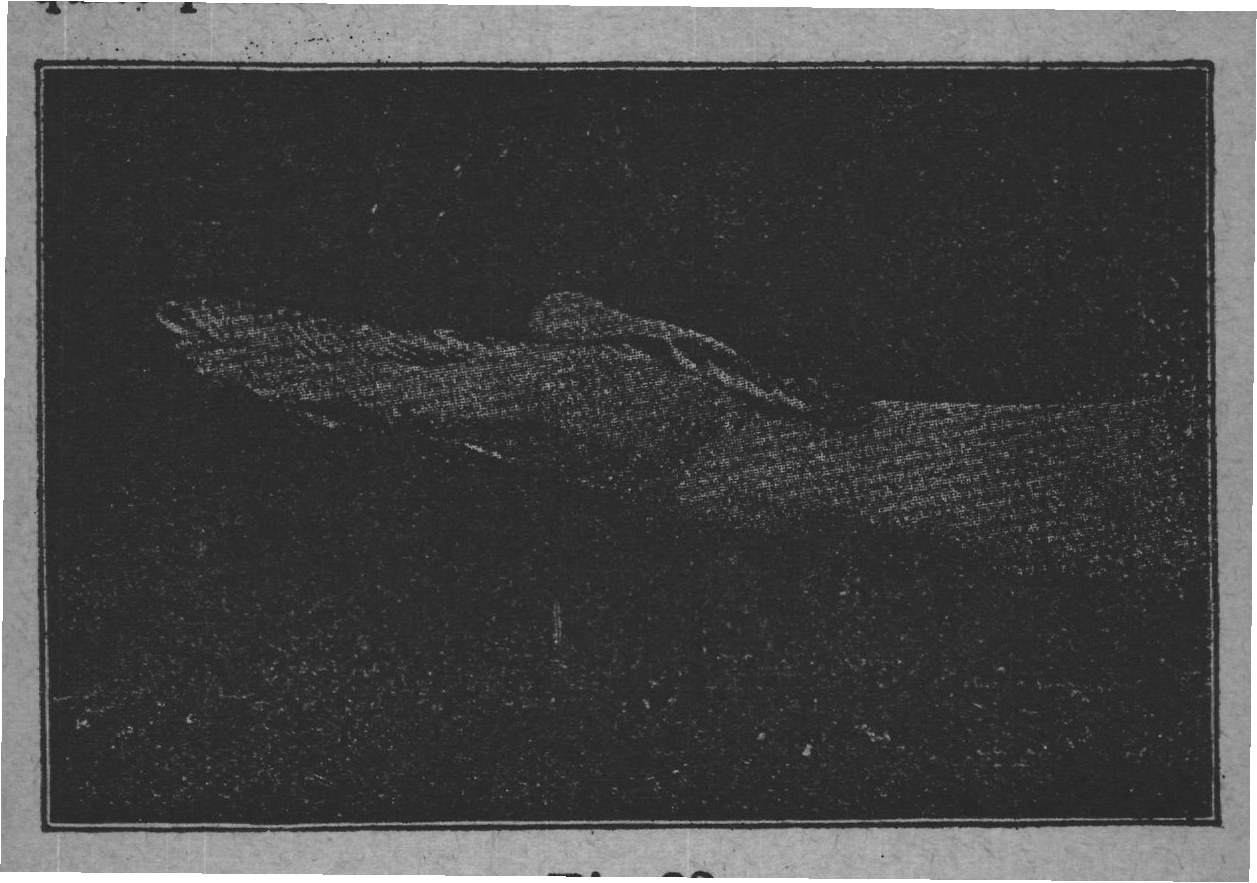
To produce the above illusion it is necessary to study carefully the accompanying photos, which explain fully the "click" pass referred to. The coins are first placed in the right hand, as in Fig. 23, and the hand is then quickly turned over, the coins being apparently transferred to the left hand, but in reality the third and fourth fingers of the right hand arrest their fall, see Fig. 24 (thereby creating a sound or Fig. 26. "click" as if the coins had fallen into left hand), and forthwith palm them in the right hand. If the foregoing be tried once or twice it will be seen what a perfect illusion it produces. Now with the right hand (containing the palmed coins) pick up the tumbler as in Fig. 25. By slightly relaxing the muscles of the palm of the right hand, the coins are released one at a time and fall into the glass (see Fig. 26). A considerable amount of practice and delicacy of manipulation is essential to ensure the coins dropping singly. The additional effect of being able to show two coins in the left hand, after eight have passed into the tumbler, is brought about by finger-palming in the left hand two dummy coins pivoted together, which admits of their being spread apart to look like two coins.
These are shown, and in the act of again closing the left hand, they are reverse-palmed, the fact of their being riveted together enabling this to be accomplished with ease.
The author can confidently recommend the above trick as being one of the best with which he is acquainted, and if enough attention be paid to all the details, the performer can easily deceive expert Conjurers who are unacquainted with the modus operandi.
DOWNS' NEW "FAN" PASS.
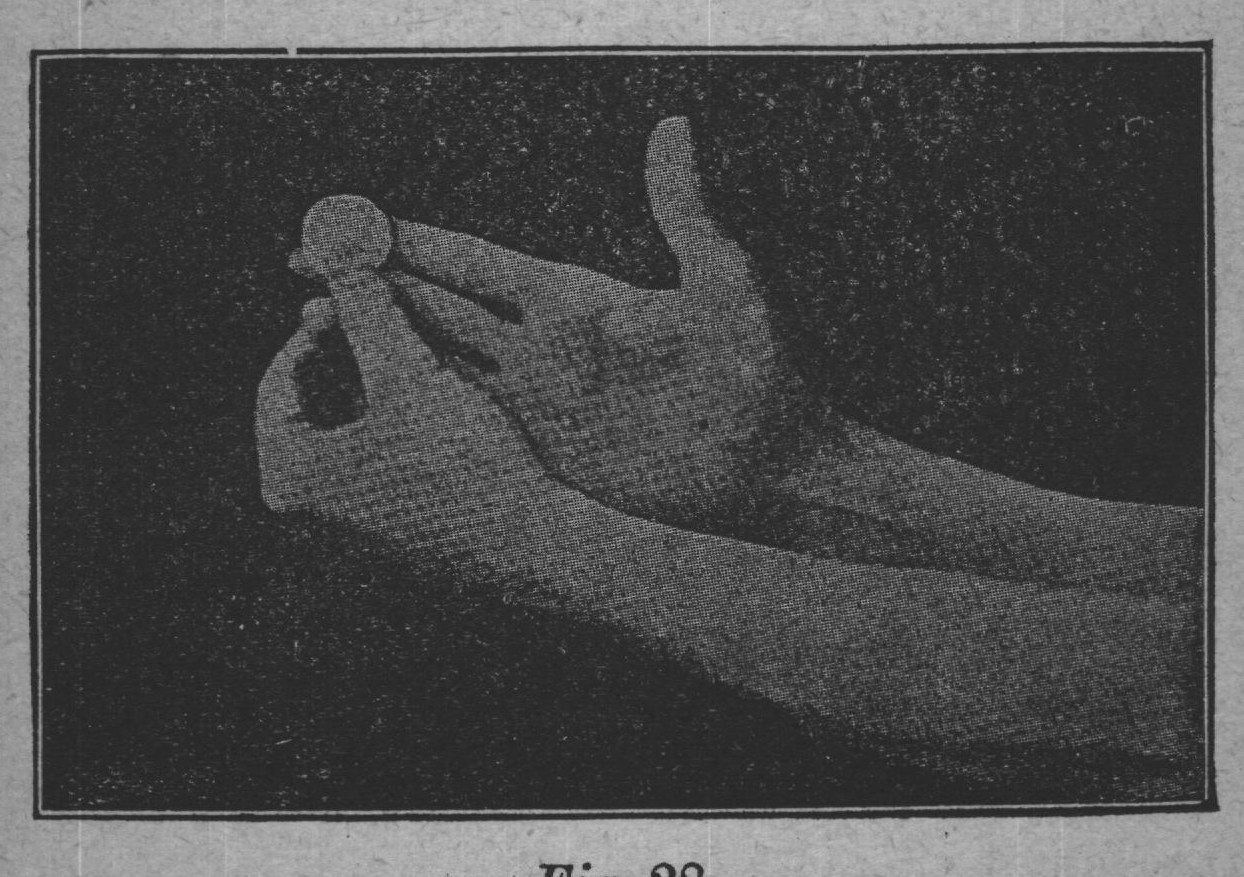
This is another favorite pass invented by the author. The coins are held as in Fig. 27. The right fingers now allow the coins to slide down one after another with a jingle into the palm Fig. 27. of the left hand, which forthwith closes up on the same, but just as it does so the two middle fingers of the right hand grip the coins and immediately palm them in the right hand. If this is carried out neatly, and under cover of the movement of the left hand, the spectators will be absolutely convinced that the coins still remain in the left hand. The foregoing is a very useful method of causing the disappearance of a number of coins after having produced them in a "fan."
THE DOWNS "EUREKA" PASS.
The author has extreme pleasure, in the following description of the pass to which he has given the above title, in taking the reader into his confidence and explaining to him fully what the writer conscientiously believes to be his most novel, puzzling and prettiest feat:- Fig. 28.
The pass is used for the vanishing of any number of coins, up to 20, one at a time.
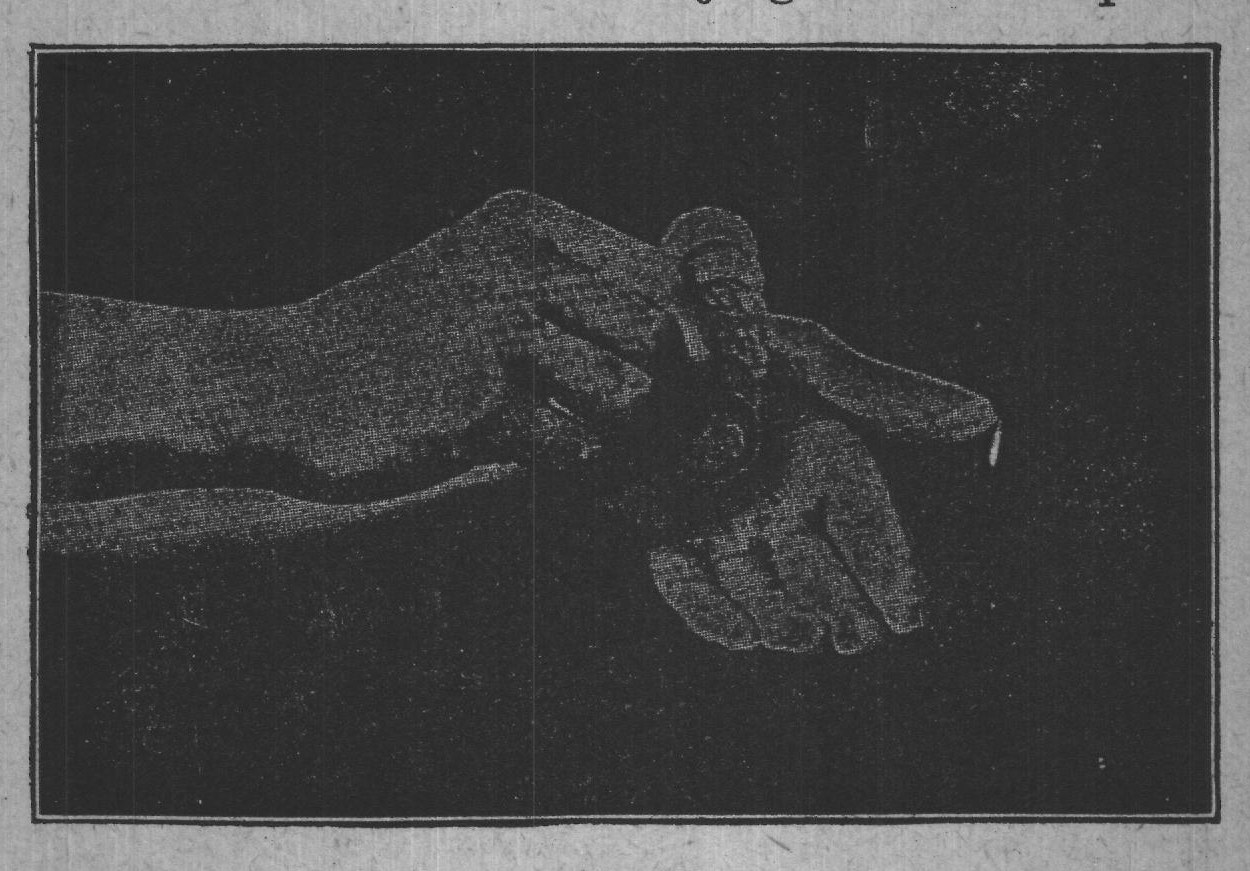
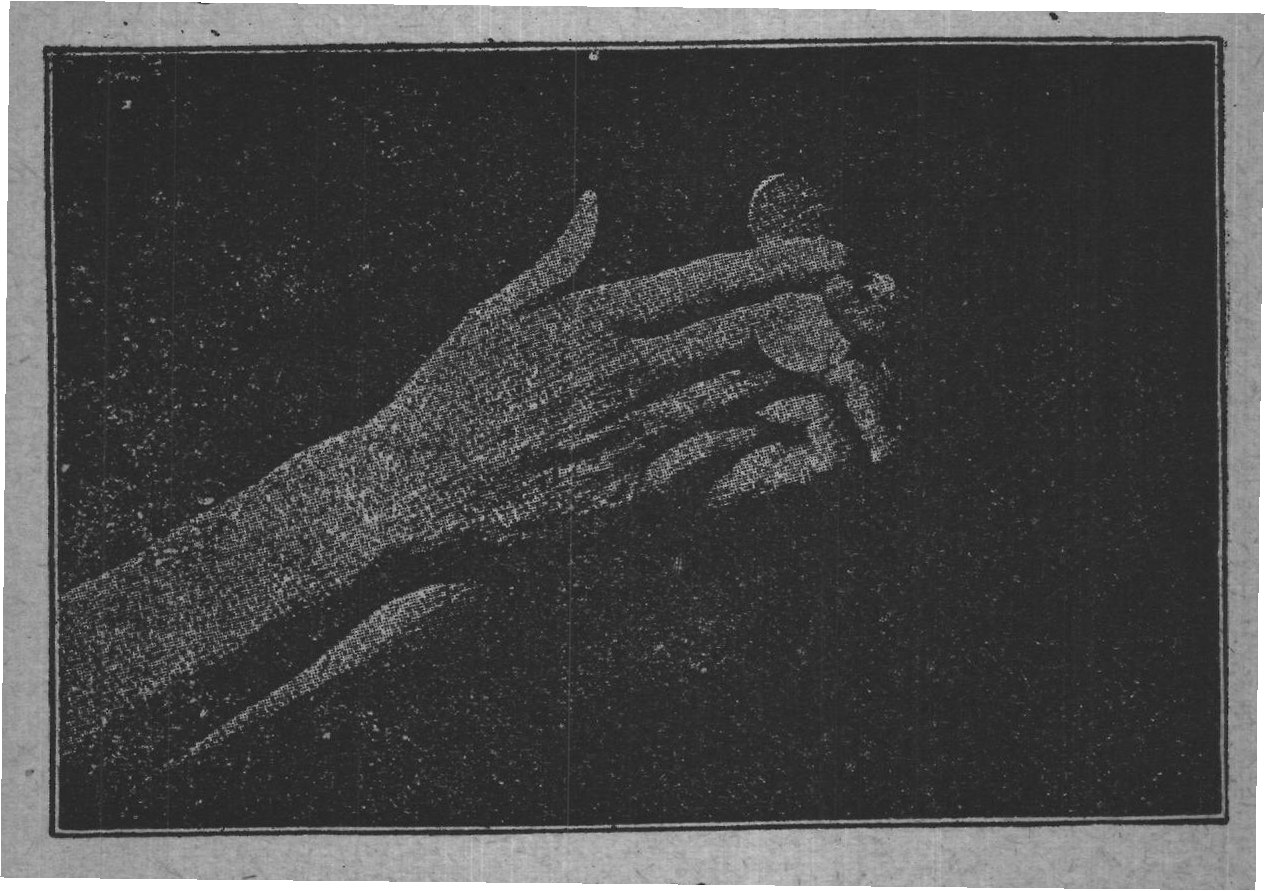
The coins are lying on the table. One is placed in the right hand as in Fig. 1 (in readiness for the back palm). This is made and both hands shown (apparently) empty. The left hand now picks up another coin by the first finger and thumb, and proceeds to place it on the right hand in the position occupied by the first (sce Fig. 28), but in the act of doing so the middle fingers of the left hand go to the back of the Fig. 29. right and remove the first coin (see Fig. 29).
The left hand now leaves the second coin on the right hand, which back-palms it, the left hand in the meantime palming coin No. 1. This is repeated until the whole of the coins are palmed in the left hand. Of course, considerable practice is necessary to palm the coins one after the other without noise, but this is not so difficult if the first coin is palmed as per Fig. 9, and each following one is placed under the preceding one.
THE "TURNOVER" WITH FORTY COINS.
This feat the author considers to be one of the best in his whole act, for the simple reason Fig. 30. that no one has yet even attempted to duplicate it publicly. Others have tried it and have got as far as making the coins turn one way, but there they stop, it being next to impossible for them to make them return without the use of the other hand.
The coins are spread from the very tips of the fingers of the right hand to the wrist (see Fig. 30). Now, by slightly contracting the palm the whole row of coins turns completely over Fig. 31. in pretty fashion. Fig. 31 shows the coins in the act of turning. Fig 32 shows them turned completely over. Now by a delicate jerk with the tips of the two middle fingers the coins are made to assume their original position. The author is able to turn the coins over quite slowly and also do the reverse movement in the same man- This makes the trick look more effective, ner. but it is exceedingly difficult of accomplishment, though, of course, it can be done with sufficient practice. The author fears that at first sight some of the sleights mentioned in this book may appear impossible of successful execution, and he therefore begs to say that he has described nothing but what he has accomplished himself, each of the experiments herein contained being quite practical.
Fig. 32.