Home › Robin Hood › Robin Hood
Robin Hood
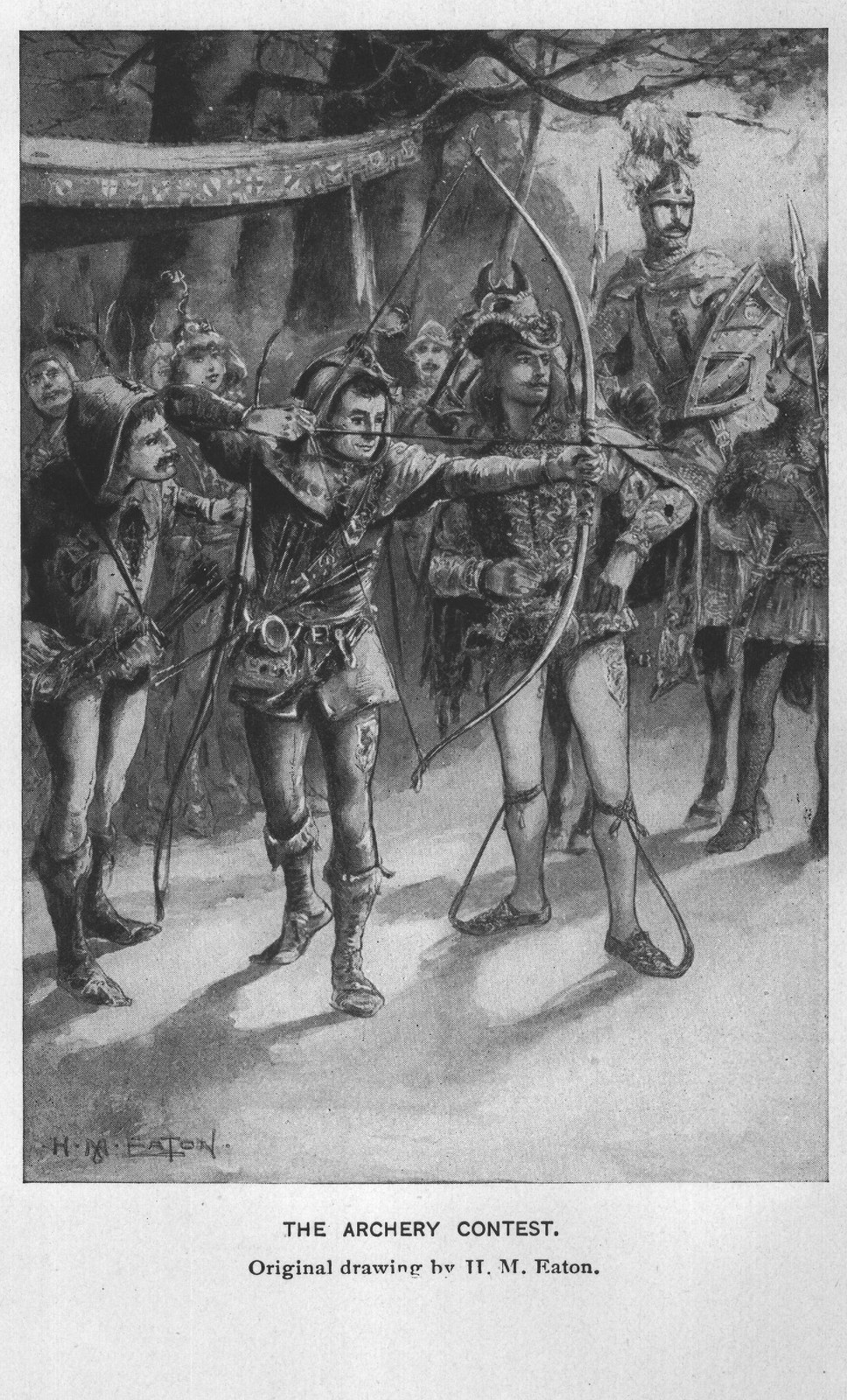
AMONG the earliest heirlooms of the Anglo-Saxon tongue are the songs and legends of Robin Hood and his merry outlaws, which have charmed readers young and old for more than six hundred years. These entertaining stories date back to the time when Chaucer wrote his "Canterbury Tales," when the minstrel and scribe stood in the place of the more prim and precise modern printed book. The question of whether or not Robin Hood was a real person has been asked for many years, just as a similar question has been asked about William Tell and others whom everyone would much rather accept on faith. It cannot be answered by a brief "yes" or "no," even though learned men have pored over ancient records and have written books on the subject. According to the general belief Robin was an outlaw in the reign of Richard I, when in the depths of Sherwood Forest he entertained one hundred tall men, all good archers, with the spoil he took; but "he suffered no woman to be oppressed or otherwise molested; poore men's goods he spared, abundantlie relieving them with that which by theft he got from abbeys and houses of rich carles." Consequently Robin was an immense favorite with the common people.
This popularity extended from the leader to all the members of his hardy band. "God save Robin Hood and all his good yeomanry" is the ending of many old ballads. The clever archer who could outshoot his fellows the brave yeoman inured to blows, and the man who could be true to his friends through thick and thin were favorites for all time; and they have been idealized in the persons of Robin Hood and his merry outlaws.