Home › The Unicorn › The Unicorn: History
The Unicorn: History
Again, the same History says that in the succeeding year the kingdom of Malin sent as tribute a Ki-Lin similar to that from Bengal.
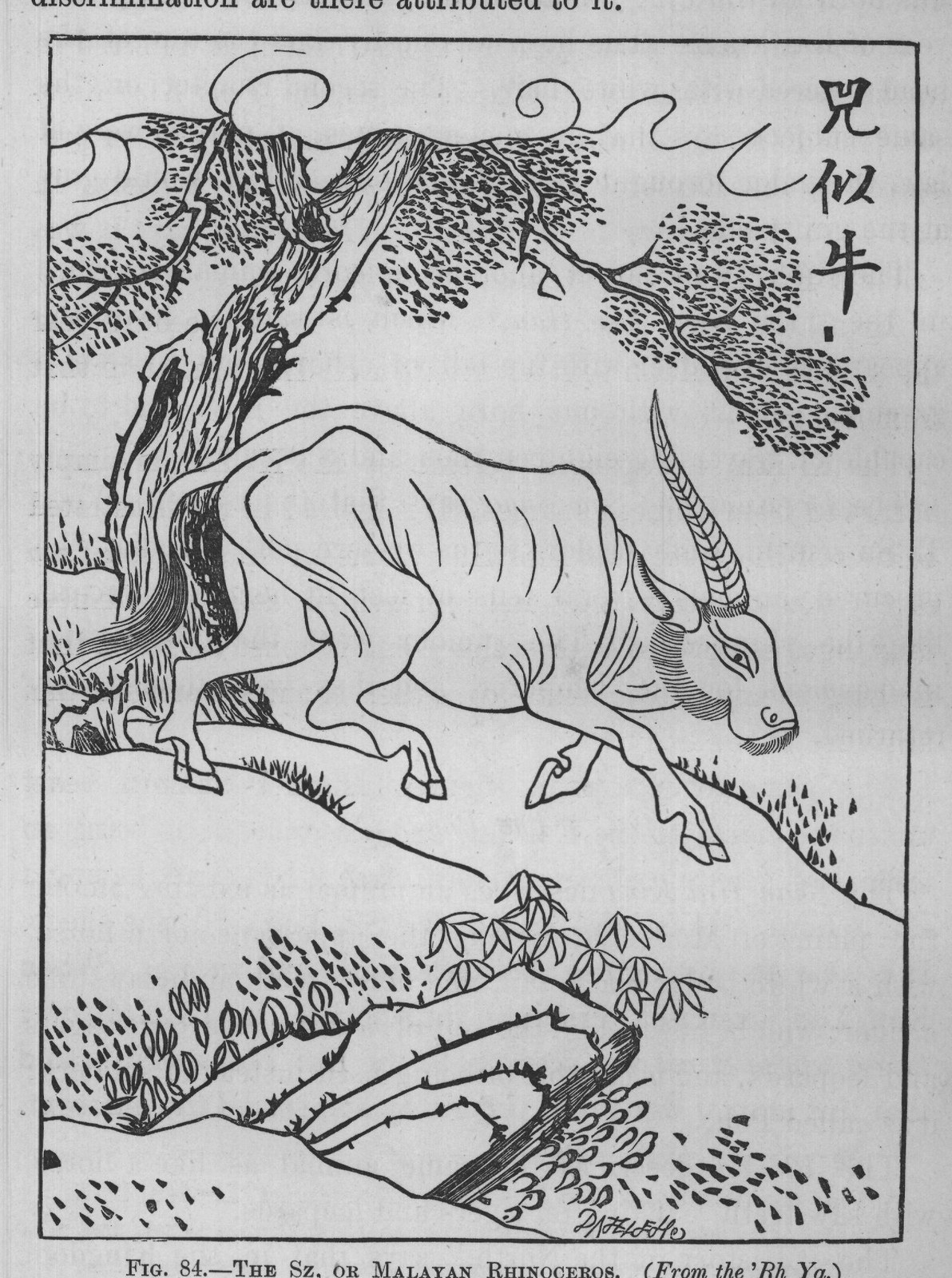
The Ki-Rin, a Japanese version of the Ki-Lin, is simply borrowed from Chinese sources. It is figured in the illustrated edition of the great Japanese Encyclopædia Kasira gaki zou vo Sin mou dzu wi tai sei,* and represented, as in the Chinese drawings, as covered with scales; but it must be noted that nothing in any of the texts of either country warrants this furniture of the body.t The same encyclopædia figures another unicorn beast under the name of the Kai Tsi, and describes it as being an animal of foreign countries, resembling a lion, and having a single horn. It is also called the Sin You or divine sheep. It is able to distinguish between right and wrong. When Kau You exercised criminal jurisdiction, he handed over those whose crime was doubtful to the Kai Tsu, and it is said that this animal destroyed the guilty and spared the innocent. * Vide the translation into French by L. Serrurier, Leyden, 1875. + "The Chinese have a tradition that this animal skips, and is so holy or harmless that it won't even tread upon an insect, and that it is to come in the shape of an incomparable man, a revealer of mysteries, supernatural and divine, and a great lover of all mankind, who is expected to come, about the time of a particular constellation in the heavens, on a special mission for their benefit. The Japanese unicorn answers the description of the animal bearing that name, and supposed to be still extant in Ethiopia, and which is equal to the size of a small This is described in the Chinese work Yuen Kien Léi Han,* under the name of the Hiai Chai, and similar powers of discrimination are there attributed to it. 咒似牛 DAFELE H FIG. 84. THE SZ, OR MALAYAN RHINOCEROS. (From the 'Rh Ya.) horse, reddish in colour, and slender as a gazelle, the male having one horn. The unicorn is the ancient crest of the kings of Israel, and is still retained by the Mikado." Epitome of the Ancient History of Japan, p. 116; N. McLeod, Nagasaki, 1875. * Vol. ccccxxx. p. 18.