Home › The Sea-Serpent › The Sea-Serpent: Australian
The Sea-Serpent: Australian
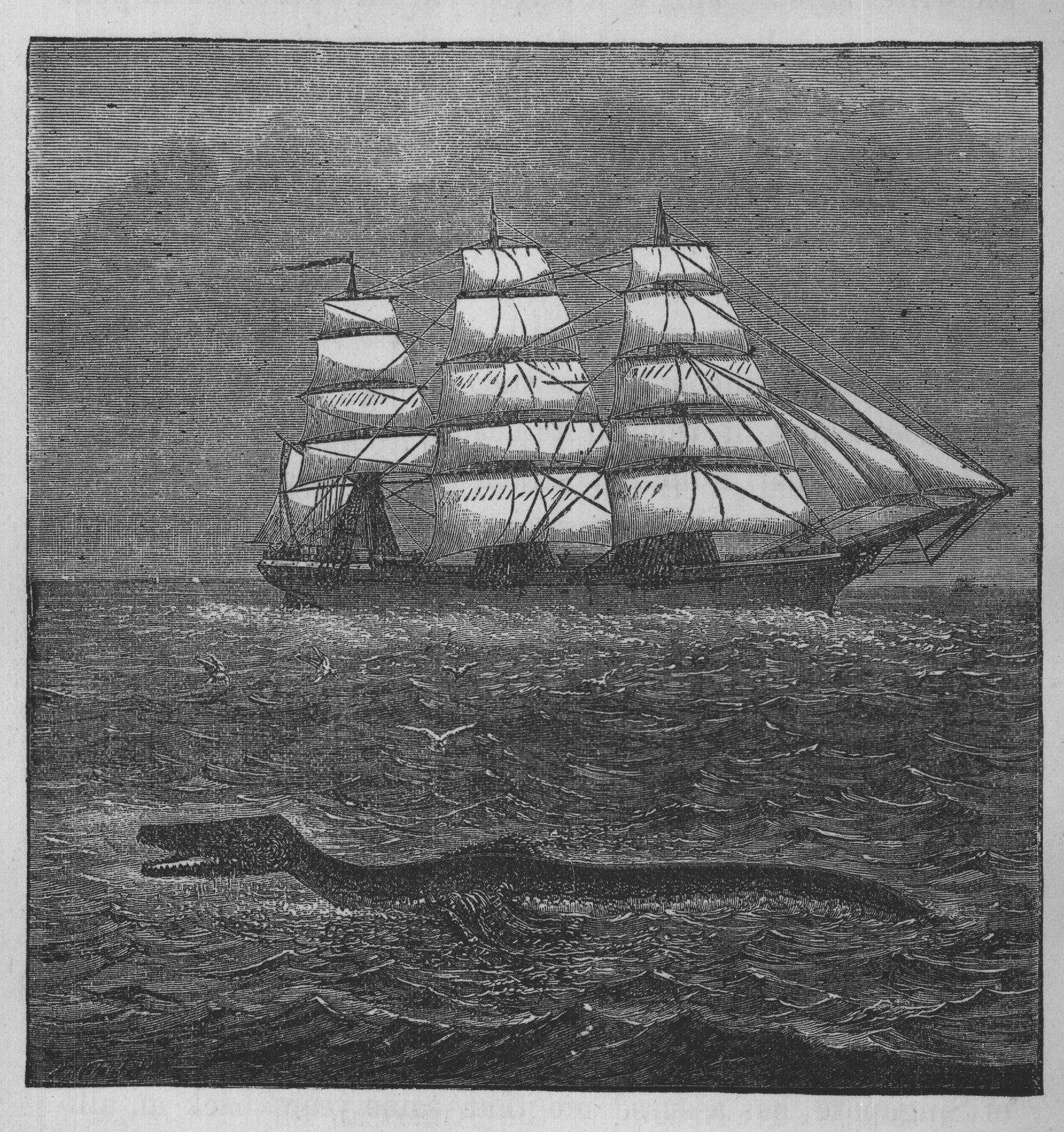
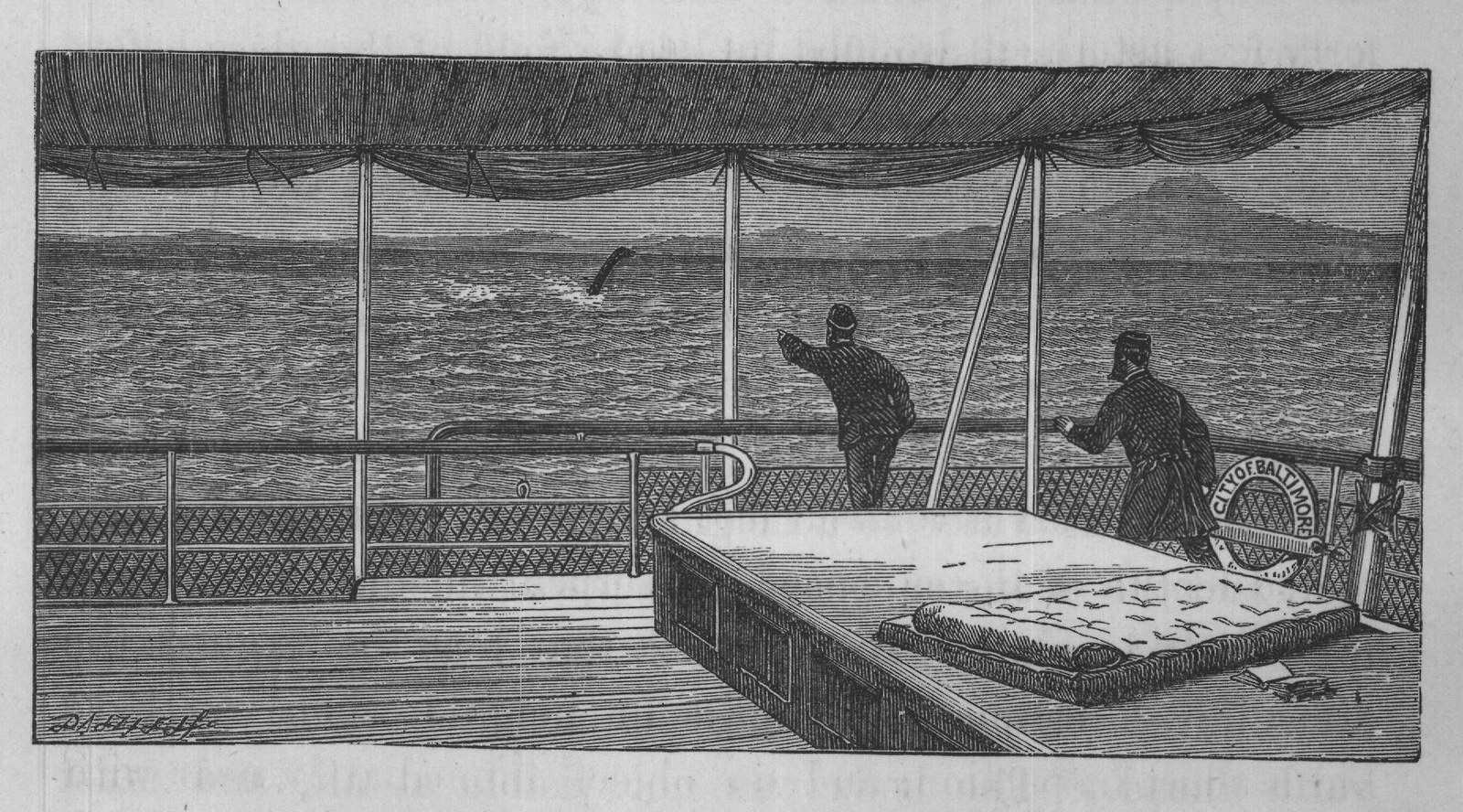
The Singapore Daily News, April 6, 1878, in its Australian *news quotes from Wellington (New Zealand), Feb. 26 (this month corresponds with August north of the Line): "The captain of the steamship Durham reports having seen a monster serpent off Nerowas Island. Thirty feet of the monster was visible out of the water. The crew and passengers corroborate the report." The Australian Sketcher for November 24, 1877, states : "Captain W. H. Nelson, of the American ship Sacramento, which arrived in this port from New York on October 20, reported that he saw the sea-serpent on his voyage. The Argus paragraph on the subject stated: 'The date on which the creature was seen was on July 30, the ship then being in lat. 31° 59′ N. and long. 37° W. The man at the wheel was the first to observe the monster, and he at once called Captain Nelson, telling him what he saw; but the latter, having the same feeling of incredulity with regard to the sea-serpent as most other people, did not hurry from below. On coming on deck, however, he was rewarded with a distant glimpse of the supposed sea-serpent, which the helmsman, for his part, FIG. 71.-SEA-SERPENT SEEN FROM THE SHIP "SACRAMENTO," JULY 30, 1877. (From the "Australian Sketcher.") declared he saw quite plainly. Some forty feet of the monster was alleged to be observable. It appeared to be about the size of a flour-barrel in girth, and its colour was yellowish; the head is described as being flat. The eyes were plainly visible. Captain Nelson is convinced that what he saw was some extraordinary marine monster.' We have obtained from John Hart, the man at the wheel, a pencil sketch of the creature, of which we give an engraving. The sketch is accompanied with a further description, in which the writer says:
This is a correct sketch of the sea-serpent seen by me while on board the ship Sacramento, on her passage from New York to Melbourne, I being at the wheel at the time. It had the body of a very large snake; its length appeared to me to be about fifty feet or sixty feet. Its head was like an alligator's, with a pair of flippers about ten feet from its head. The colour was of a reddish brown. At the time seen it was lying perfectly still, with its head raised about three feet above the surface of the sea, and as it got thirty or forty feet astern, it dropped its head.'" I confess that I do not attach much weight to this last example, from the suspicious resemblance which the illustration given in the Sketcher bears to an alligator, suggesting that possibly such a creature may have been blown by winds or carried by currents to the position where it was seen. It is true that Mr. Gosse quotes the size of the largest alligator on record as only seventeen feet and a half, whereas the estimated length of the supposed sea-serpent in this instance was from forty to sixty. But against that may be argued the difficulty of estimating lengths or heights when you have but a short inspection, and no object immediately near with which to institute a comparison*; while I am by no means certain that Mr. Gosse's maximum is correct. Dr. Dennys, of Singapore, has assured me that some years back an alligator, approaching thirty feet in length, haunted for some * Within a few days of writing these lines I made one of a party of four to visit the waterfalls of Taki-kwannon, near Nagasaki. I asked for estimates of the height of the fall, which was variously guessed, by different members of the party, at from forty-three to one hundred and fifty feet. days the small tidal creek which runs through, and for some miles above, that town; while I very well remember Mr. Gregory, the Surveyor-General of Queensland, informing me that in the rivers in the north of that colony there were alligators equalling in length a whale-boat, say twenty-eight feet.