Home › On Some Remarkable Animal Forms › On Some Remarkable Animal Forms: Triassic
On Some Remarkable Animal Forms: Triassic
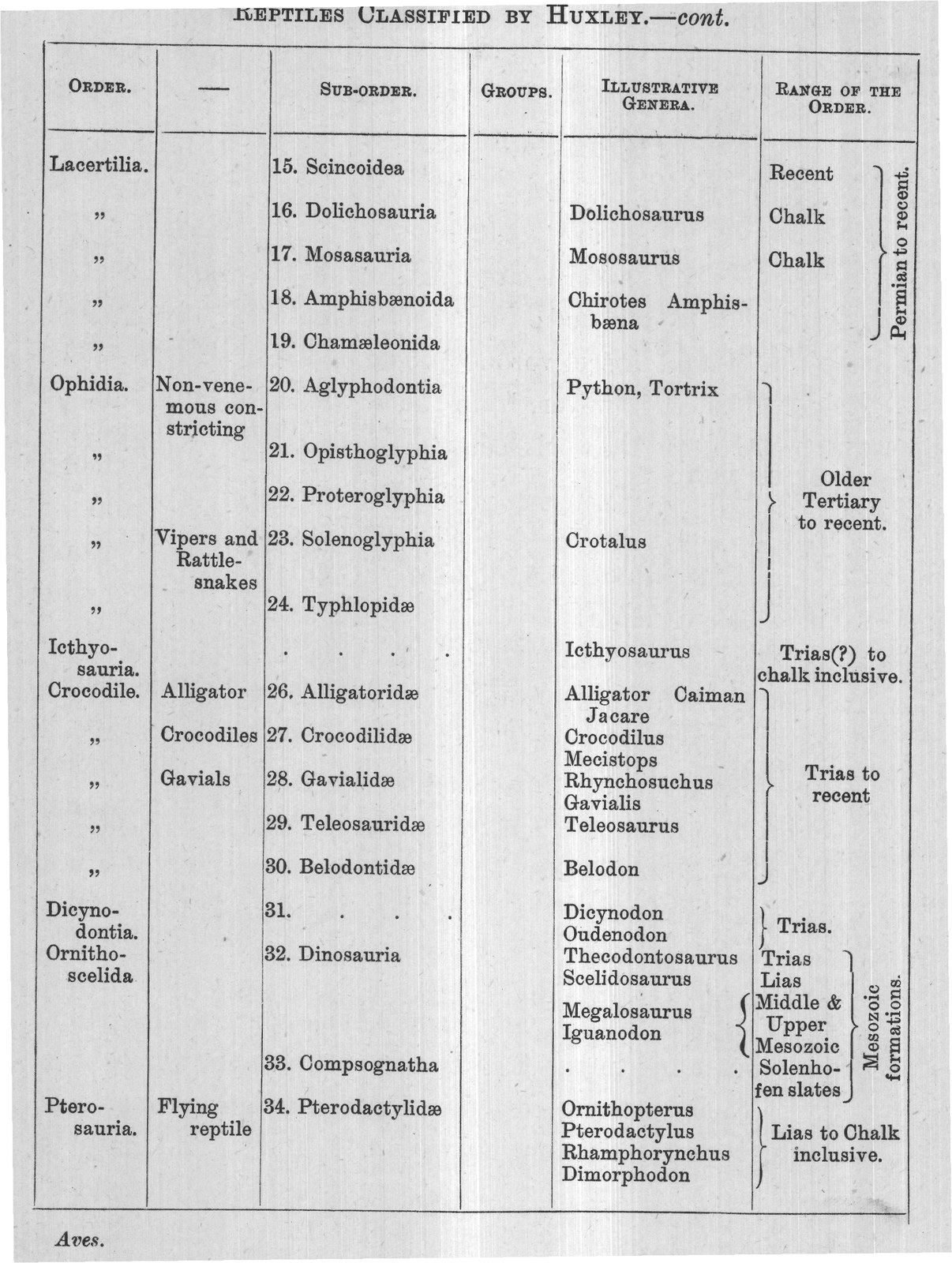
Triassic Nothosaurus دو Simosaurus Pistosaurus Lacertilia. Geckos 7. Ascalabota Trias to Chalk inclusive. recent وو 8. Rhynchocephala 9. Homœosauria وو 10. Protosauria Sphenodon or Rhyncocephalus Solenhofen slates to Trias Permian وو Monitor وو 11. Platynota recent 12. Eunota وو وو Permian to recent. 1.3. Lacertina وو 14. Chalcidea وو , REPTILES CLASSIFIED BY HUXLEY.-cont.
SUB-ORDER.
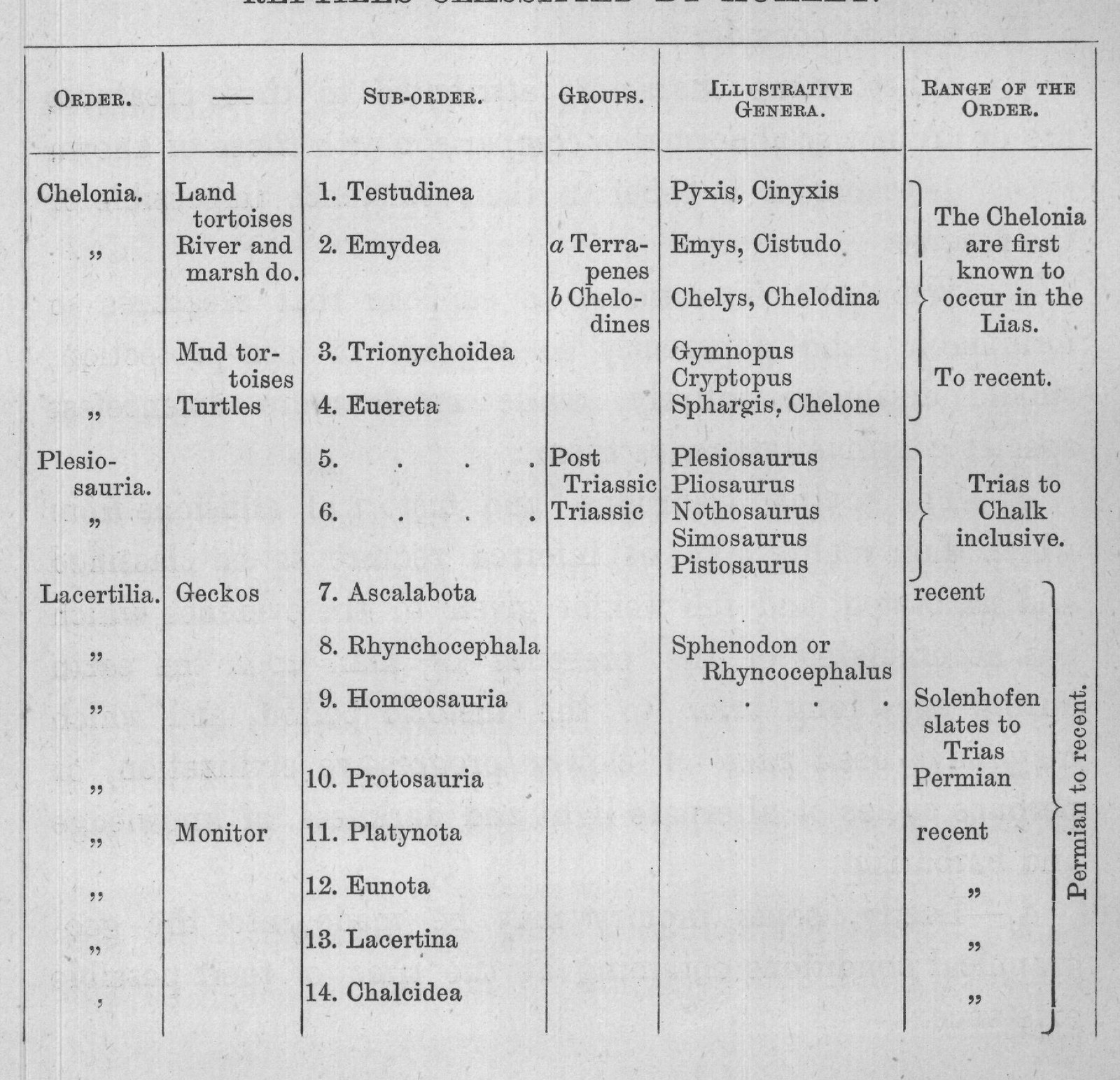
GROUPS.
ILLUSTRATIVE GENERA.
RANGE OF THE ORDER.
Lacertilia. وو وو وو وو 15. Scincoidea 16. Dolichosauria 17. Mosasauria 18. Amphisbænoida 19. Chamæleonida Ophidia. Non-vene- 20. Aglyphodontia وو Dolichosaurus Mososaurus Chirotes Amphisbæna Python, Tortrix mous constricting 21. Opisthoglyphia وو " وو 22. Proteroglyphia Vipers and 23. Solenoglyphia Rattlesnakes 24. Typhlopidæ Recent Chalk Chalk Older Tertiary to recent.
Crotalus Gavials 28. Gavialidæ 29. Teleosauridæ Icthyosauria.
Crocodile. Alligator 26. Alligatoridæ وو وو وو Crocodiles 27. Crocodilidæ Icthyosaurus Alligator Caiman Jacare Crocodilus Mecistops Rhynchosuchus Gavialis Teleosaurus Trias(?) to chalk inclusive.
Trias to recent 30. Belodontidæ Belodon وو Dicyno- Ornitho- 31.
Dicynodon Trias. dontia.
Oudenodon 32. Dinosauria Thecodontosaurus Trias scelida Scelidosaurus Lias Middle & Megalosaurus Iguanodon Upper Mesozoic 33. Compsognatha Solenho- Mesozoic formations.
Ptero- Flying 34. Pterodactylidæ sauria. reptile Ornithopterus Pterodactylus Rhamphorynchus fen slates Lias to Chalk inclusive.
Dimorphodon Aves.
The most bird-like of reptiles, the Pterosauria, appear to have possessed true powers of flight; they were provided with wings formed by an expansion of the integument, and supported by an enormous elongation of the ulnar finger of the Permian to recent. anterior limb. The generic differences are based upon the comparative lengths of the tail, and upon the dentition. In Pterodactylus (see Fig. 2, p. 18), the tail is very short, and the jaws strong, pointed, and toothed to their anterior extremities. In Rhamphorynchus (see Fig. 3, p. 18), the tail is very long and the teeth are not continuous to the extremities of the jaws, which are produced into toothless beaks. The majority of the species are small, and they are generally considered to have been inoffensive creatures, having much the habits and insectivorous mode of living of bats. One British species, however, from the white chalk of Maidstone, measures more than sixteen feet across the outstretched wings; and other forms recently discovered by Professor Marsh in the Upper Cretaceous deposits of Kansas, attain the gigantic proportions of nearly twenty-five feet for the same measurements; and although these were devoid of teeth (thus approaching the class Aves still more closely), they could hardly fail, from their magnitude and powers of flight, to have been formidable, and must, with their weird aspects, and long outstretched necks and pointed heads, have been at least sufficiently alarming.
We need go no farther than these in search of creatures which would realise the popular notion of the winged dragon.
The harmless little flying lizards, belonging to the genus Draco, abounding in the East Indian archipelago, which have many of their posterior ribs prolonged into an expansion of the integument, unconnected with the limbs, and have a limited and parachute-like flight, need only the element of size, to render them also sufficiently to be dreaded, and capable of rivalling the Pterodactyls in suggesting the general idea of the same monster.
It is, however, when we pass to some of the other groups, that we find ourselves in the presence of forms so vast and terrible, as to more than realise the most exaggerated impression of reptilian power and ferocity which the florid imagination of man can conceive.